

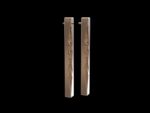
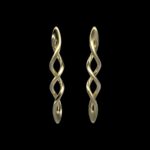
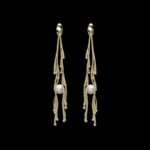
Namazye Earrings
$0.01
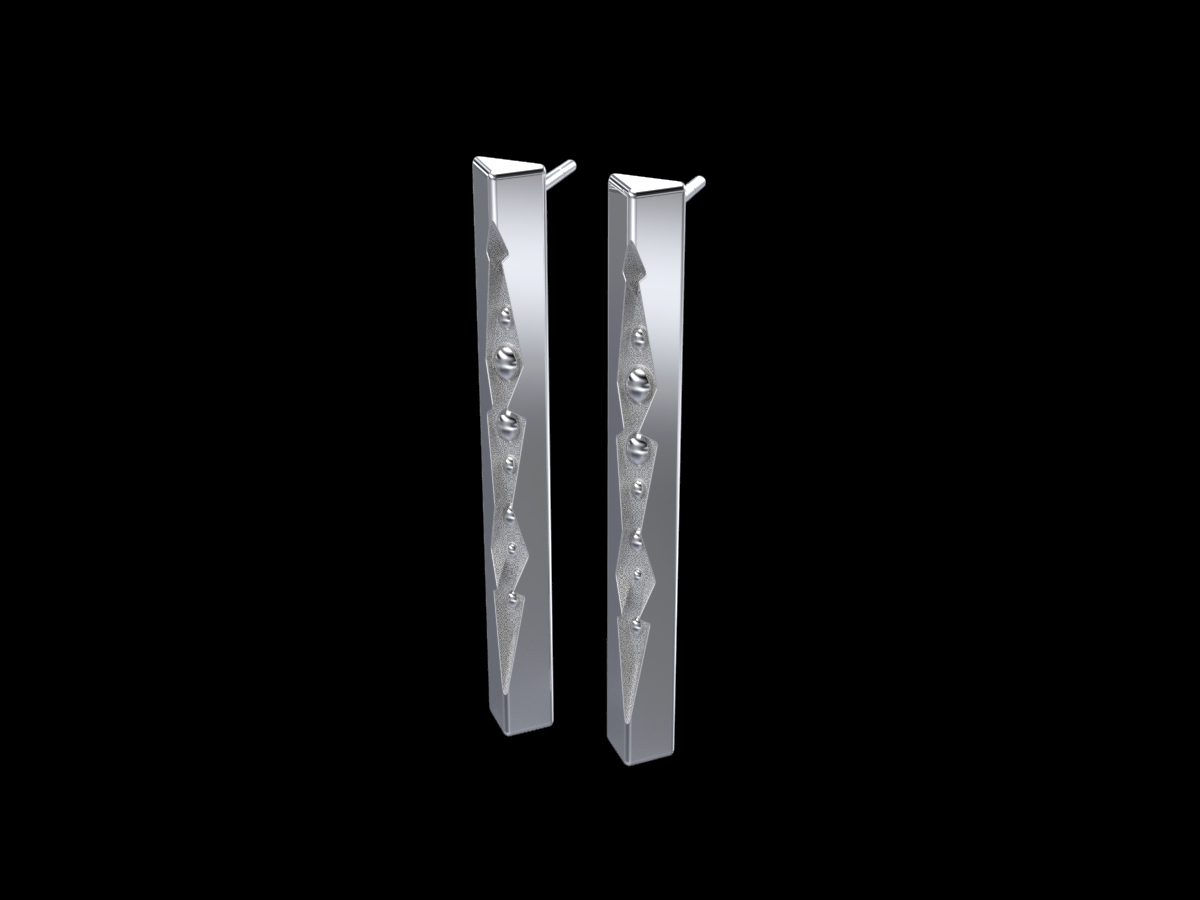
Prismatic bar earrings in 18k gold with a granulated zigzag surface, their geometric form drawn from the Amazigh tradition of North Africa — the free people whose angular art has been read as both decoration and identity for thousands of years.
Made to order.
Request a quote: contact@friszman.com or Contact us
Namazye earrings draw their name and form from the Amazigh tradition — the indigenous people of North Africa whose civilization stretches from the Atlantic coast of Morocco to the western edge of Egypt, from the Mediterranean shore to the deep Sahara.
The Amazigh — whose name means ‘free people’ in their own language — are among the oldest continuously living cultures in the world. Their art is immediately recognizable: bold geometric patterns built from triangles, zigzags, lozenges, and parallel lines, used in textiles, pottery, body art, and jewelry for thousands of years.
As a result, Amazigh geometric design is not merely decorative but communicative: specific patterns identify specific communities, family lineages, and spiritual affiliations.
Furthermore, the Tifinagh script — the ancient alphabet of the Amazigh people, one of the oldest writing systems still in active use — is itself geometric, its letters formed from combinations of dots, lines, and circles. The Namazye earrings carry that geometric tradition: the prismatic bar and the zigzag as the formal vocabulary of a civilisation that has expressed itself in precise angular form for millennia.
The Design of the Namazye Earrings
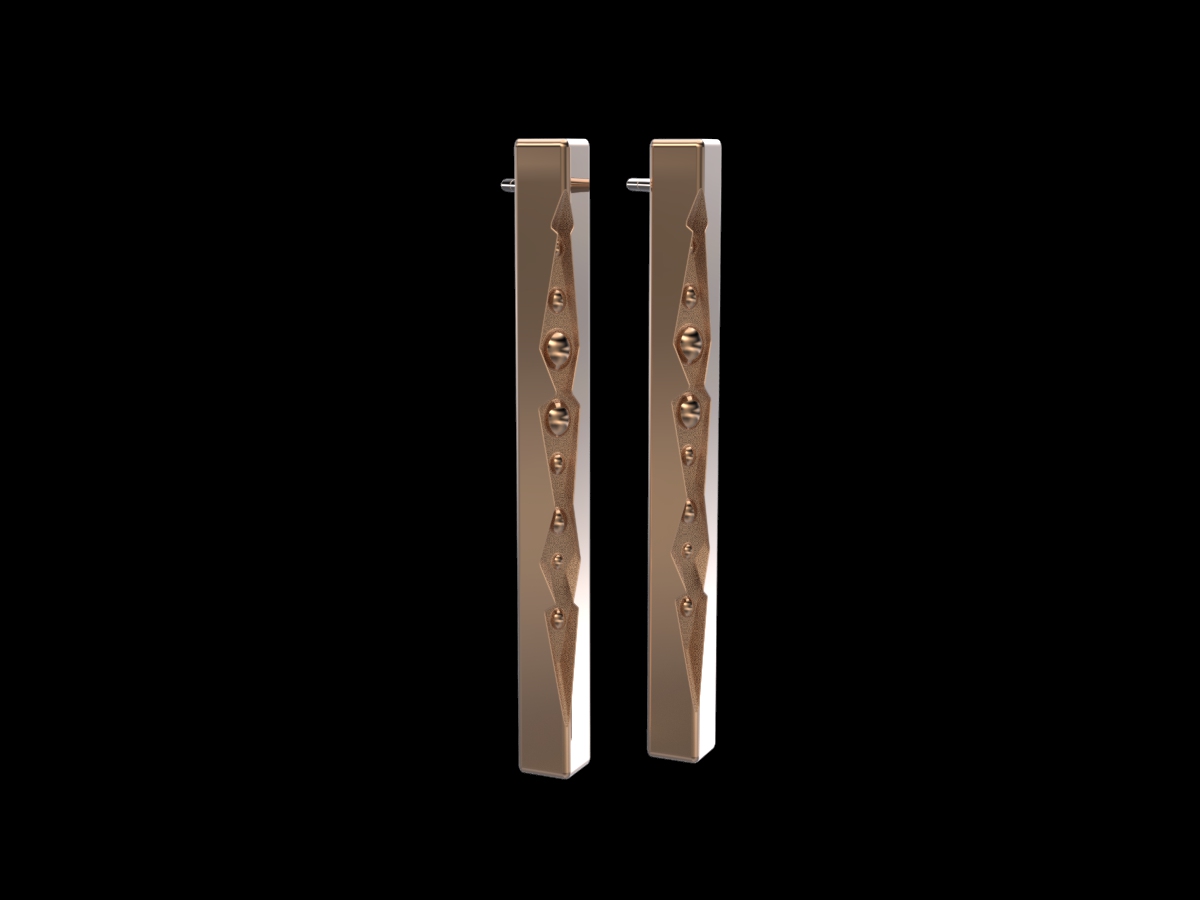
The Namazye earrings translate Amazigh geometric precision into 18k gold. Each piece is a prismatic bar — a clean, angular drop whose surfaces are cut into geometric facets that catch the light in the manner of a prism.
The surface carries a granulation texture: fine spheres of gold distributed in the zigzag pattern of Amazigh weaving and body art. As a result, the Namazye earrings carry two registers of the tradition simultaneously — the prismatic form as the large-scale geometry and the granulation as the fine-scale pattern. Therefore, they reward looking at from both a distance and close up.
The Geometry of the Free People
The prismatic bar with its granulated zigzag is the soul of this design. Specifically, the zigzag is one of the oldest and most universal geometric patterns in human art — and nowhere is it more charged with meaning than in the Amazigh tradition, where it marks boundaries, describes motion, and identifies the maker.
Worn as drops, the Namazye earrings move with the wearer, the prismatic faces catching and releasing the light at each step.
Furthermore, the granulation adds depth to the surface so the zigzag reads as dimensional rather than flat, the tiny spheres of gold giving the pattern the quality of fine embroidery in metal. In this way, the Namazye earrings carry the essential quality of Amazigh art: precision that is also alive.
Namazye Earrings in 18k Gold
In rose gold the prismatic bar and granulation glow with warmth, the zigzag reading rich and intricate against the warm surface. In white gold the Namazye earrings turn cool and precise, the geometry reading with the clarity of Tifinagh script carved in stone.
In yellow gold they radiate with full golden intensity — the most direct echo of the Saharan sun that has shaped the Amazigh aesthetic for thousands of years. Whichever metal you choose, the geometry holds its precision.
Craftsmanship and 3D Precision
Each Namazye earring was developed in 3D modeling software and brought to life through precision 3D printing and meticulous hand-finishing. The prismatic bar with granulated zigzag demands digital modeling: every facet of the prism must be angled precisely, every sphere of the granulation must be placed in the exact position of the zigzag pattern, and the two earrings of a pair must mirror each other exactly.
Hand-finishing polishes the raised surfaces while preserving the depth between the granulation spheres. This is the precision that only the Friszman MD process can deliver reliably.
A Made-to-Order Piece
Like every Friszman MD creation, the Namazye earrings are made to order and hand-finished in 18k gold. Explore the full earrings collection to see how each design draws its form from the world’s great traditions. You can also explore the Amazigh and North African traditions in the Africana collections of the Library of Congress.
| Gold | 18K Rose Gold, 18K White Gold, 18K Yellow Gold |
|---|
Related products
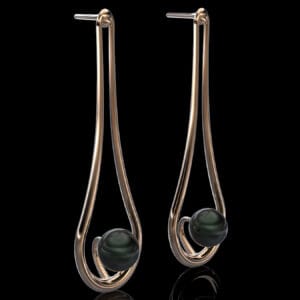
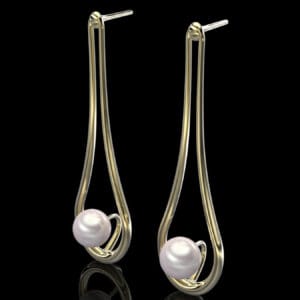
Aeglee Earrings
Aeglee earrings. Named for Aeglee, the most radiant of the Hesperides — the Greek nymphs who tended the garden of golden apples at the edge of the world. The Aeglee earrings carry that luminosity in 18k gold: a fluid teardrop form flowing downward to cradle a lustrous pearl in a soft organic loop. Available in rose, white, and yellow gold with black or white pearl.
Made to order.
Request a quote: contact@friszman.com or Contact us
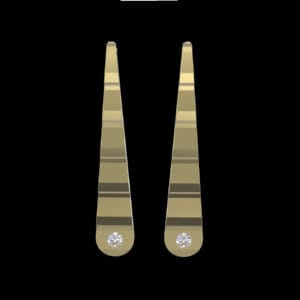
Anigridee Earrings
Anigridee earrings in 18k gold — long tapered architectural drop earrings with a precious stone at the tip, named for the Anigridae, the sacred healing nymphs of ancient Greece. Available in Yellow Gold with Diamond, White Gold with Sapphire, and Rose Gold with Ruby.
Made to order.
Request a quote: contact@friszman.com or Contact us
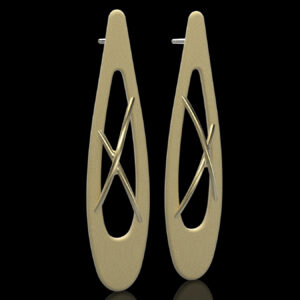
Archius Earrings
Archius earrings in 18k gold — two elongated columns of brushed gold crossed by sleek polished bars, named for Archias of Corinth, founder of Syracuse. Bold architectural jewelry designed to command attention. Available in Rose Gold, White Gold, and Yellow Gold.
Made to order.
Request a quote: contact@friszman.com or Contact us
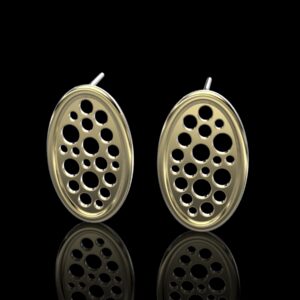
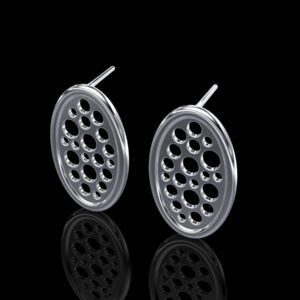
Aurelys Earrings
Bold oval forms in 18k gold, pierced with openwork that lets light and air pass through the metal. The Aurelys earrings are named for Aura, the Titan goddess of the breeze — structure and movement held in a single piece.
Made to order.
Request a quote: contact@friszman.com or Contact us
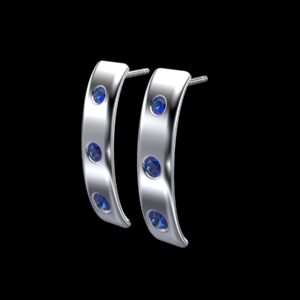
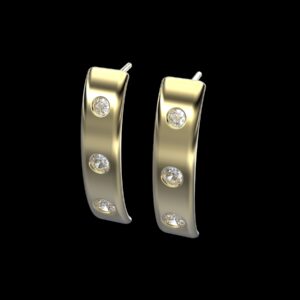
Baetyl Earrings
Sculpted gold forms inspired by the sacred stones of the ancient world, each cradling a single ruby, sapphire, or diamond at its heart. The Baetyl earrings are named for the beth-el — the ‘house of god’ — a stone believed to hold the divine within itself. Made to order in São Paulo in 18k rose, white, or yellow gold.
Made to order.
Request a quote: contact@friszman.com or Contact us
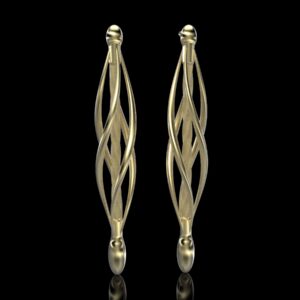
Djed Earrings
Spiral drop earrings in 18k gold, their form drawn from the Djed pillar — the backbone of Osiris and the ancient Egyptian symbol of endurance. The Djed earrings unwind the stacked rings of the sacred column into a descending helix.
Made to order.
Request a quote: contact@friszman.com or Contact us
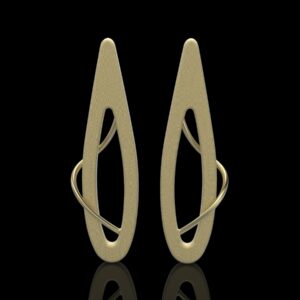
Vayunee Earrings
Open-form stud earrings in 18k gold with a sand-brushed surface and a polished wire crossing the central void, inspired by Vayu — the Vedic god of wind and the life force of all breath.
Made to order.
Request a quote: contact@friszman.com or Contact us
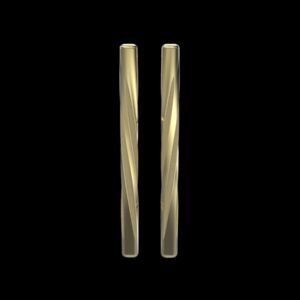
Wuchowsen Earrings
Delicate helical twist bar earrings in 18k gold, their spiral form carrying the quality of wind made visible. The Wuchowsen Earrings are named for the immortal Wind Bird of Wabanaki legend, whose wing beats are the wind itself.
Made to order.
Request a quote: contact@friszman.com or Contact us