

Orion Pendants
$0.01
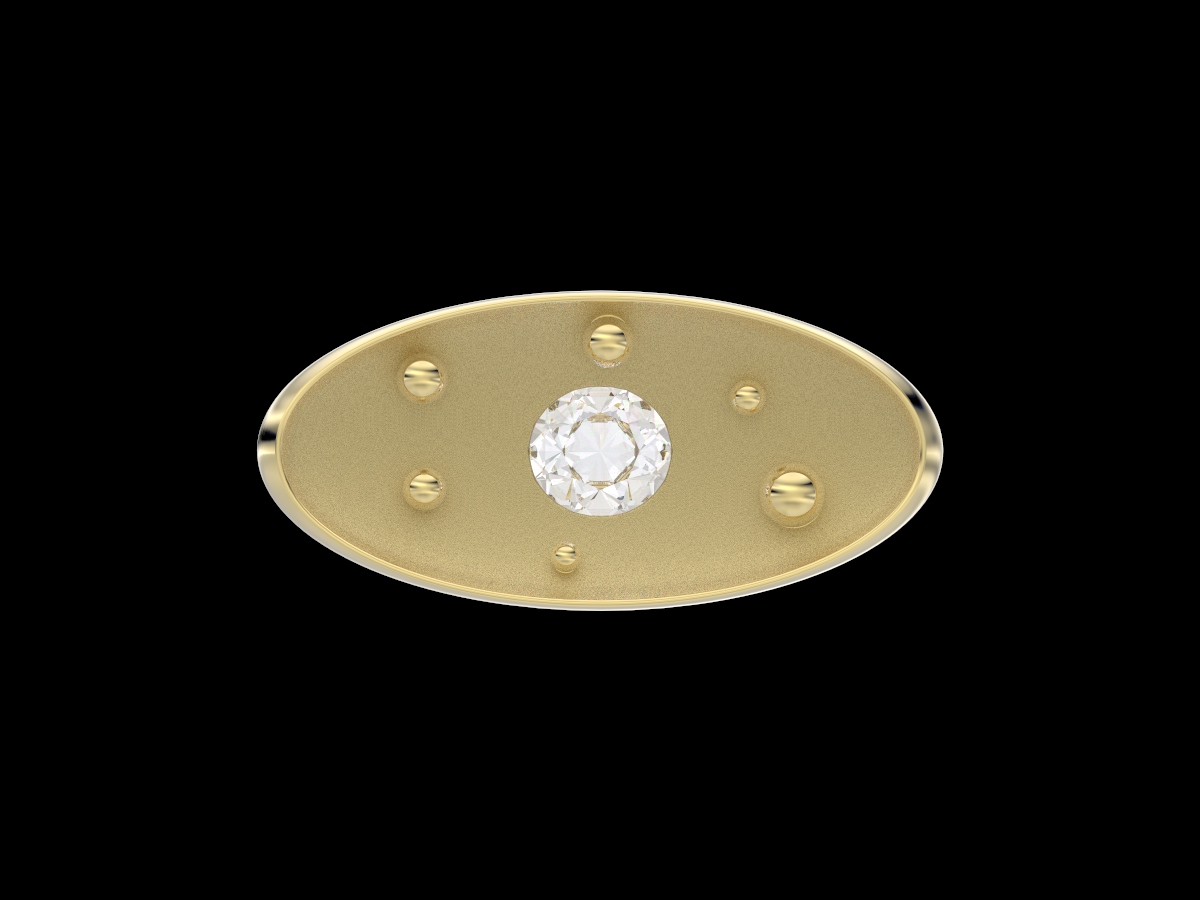
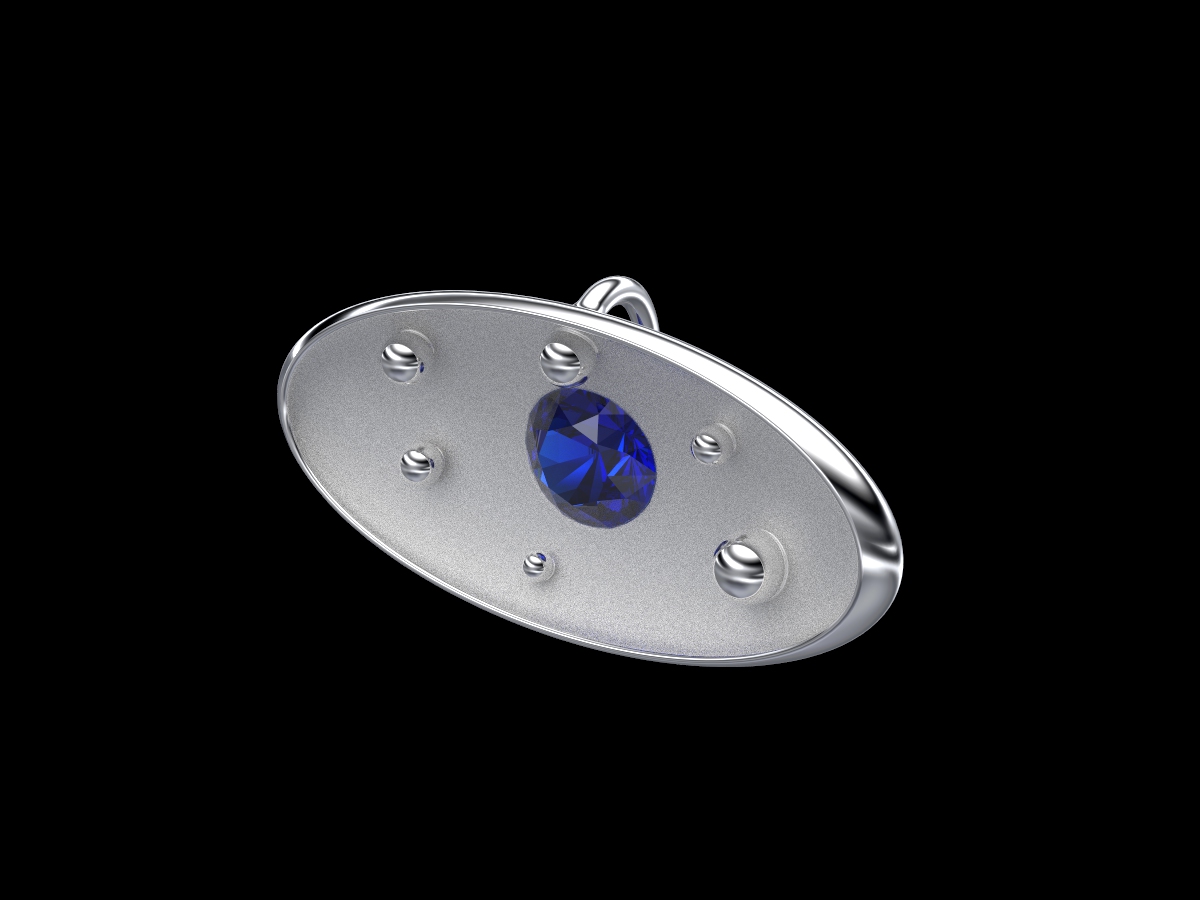
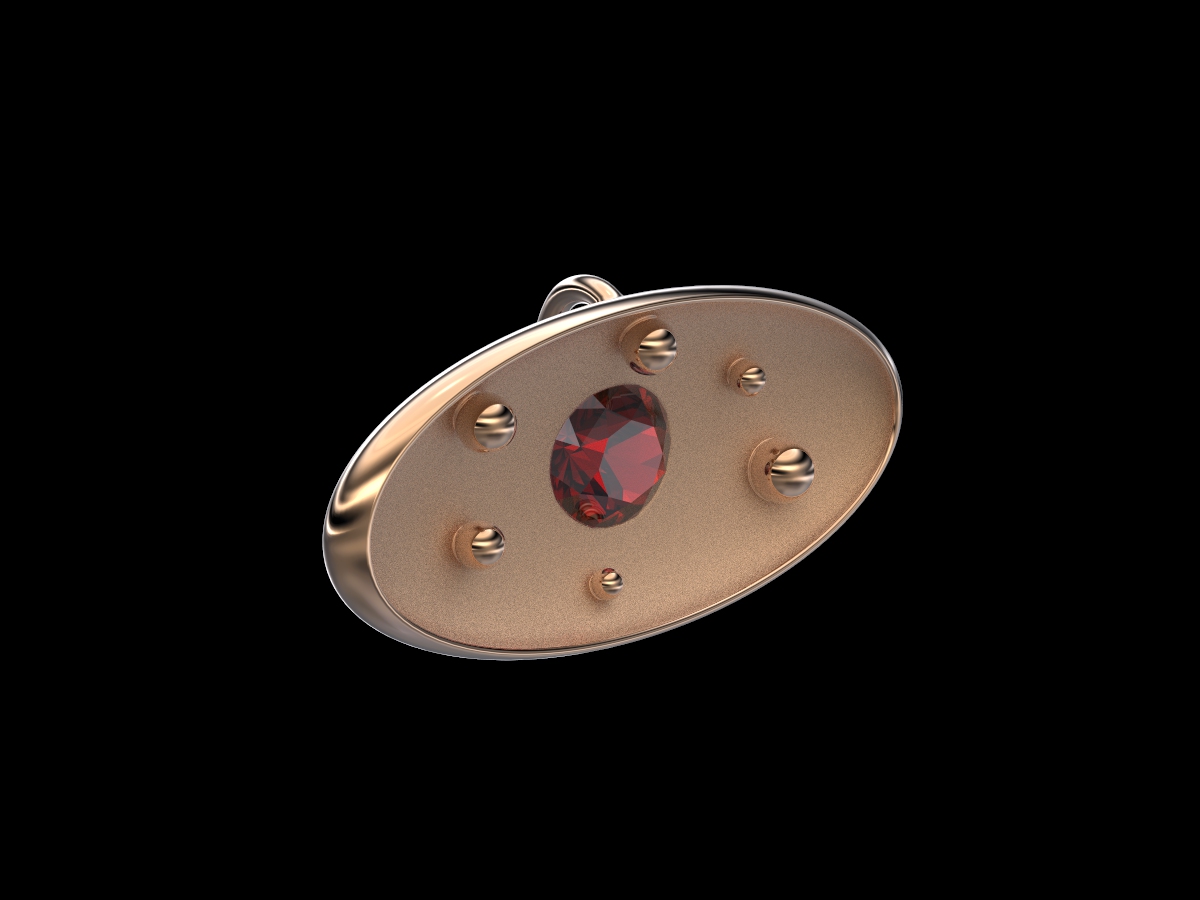
A constellation star map pendant in 18k gold, set with a ruby, sapphire, or diamond, its face carrying the stars of Orion. Named for the great hunter of the night sky, the hero of the oldest written epic, and the constellation whose three belt stars align with the three pyramids of Giza.
Made to order.
Request a quote: contact@friszman.com or Contact us
Orion Pendant takes its name from the most recognized constellation in the night sky — and the one that has gathered the most meaning from the most civilizations over the longest span of human history. In Greek mythology, Orion was the greatest hunter who ever lived: son of Poseidon, beloved of the goddess of dawn, a figure of such beauty and power that Zeus placed him among the stars after his death, his belt of three stars the most instantly recognizable asterism in the world.
However, the Greeks were not the first to name him. In Babylonian and Sumerian tradition, the same constellation was understood as the hero Gilgamesh — the semi-divine king of Uruk whose epic is the oldest written story known to exist, composed in cuneiform on clay tablets more than four thousand years ago.
Gilgamesh sought immortality and found instead the deepest understanding of what it means to be mortal. Furthermore, the three stars of Orion’s belt — Alnitak, Alnilam, and Mintaka — align with remarkable precision with the three pyramids of Giza: the correlation in their relative sizes, spacing, and diagonal arrangement mirrors the constellation so closely that many researchers believe the ancient Egyptians deliberately positioned the pyramids to reflect Orion’s belt on the ground.
As a result, the Orion Pendant carries the weight of three civilizations looking at the same three stars and finding in them the form of their greatest stories.
The Design of the Orion Pendant
The Orion Pendant translates the constellation into 18k gold. The pendant face carries a star map of Orion: the seven principal stars of the constellation placed in their actual relative positions, with the three belt stars given prominence as the most recognized element of the design.
A gemstone is set at the heart of the map: a diamond, ruby, or sapphire that reads as the concentrated light of Orion’s brightest star, the red supergiant Betelgeuse at his shoulder. As a result, the Orion Pendant reads as both jewelry and navigational instrument: the sky held in a wearable form, the stars placed where they actually are.
The Three Stars and Three Pyramids
The belt of three stars is the soul of this design. Specifically, the three belt stars — in their diagonal arrangement, with their slight variation in relative brightness mirrored in their spacing — are the element that connects the Greek myth, the Babylonian epic, and the Egyptian pyramid field in a single visual form.
Worn close to the body, the Orion Pendant keeps the constellation map facing outward. Furthermore, the gemstone at the heart of the design catches the light and pulses with it, the way Betelgeuse pulses — a red supergiant so vast that if it were placed where our sun sits, it would extend beyond the orbit of Mars.
In this way, the pendant carries the scale of what the ancients saw when they looked up.
Orion Pendant in 18k Gold and Colored Gemstones
In rose gold the star map glows with warmth, set with a ruby that burns at the pendant’s heart like the red supergiant Betelgeuse. In white gold the Orion Pendant turns cool and celestial, a sapphire reading within the constellation map with the blue clarity of Rigel — the blue supergiant that marks Orion’s foot.
In yellow gold it radiates with full golden intensity, a brilliant diamond at the center — the most vivid possible star in the ancient hunter’s constellation. Whichever stone you choose, the map holds its course.
Craftsmanship and 3D Precision
Each Orion Pendant was developed in 3D modeling software and brought to life through precision 3D printing and meticulous hand-finishing. The constellation map demands digital modeling: every star point must be placed at the correct relative position so the map reads as the actual sky, the gemstone setting must hold the stone at exactly the right position within the map, and the pendant must hang true so the constellation faces forward when worn.
Hand-finishing polishes every surface to a high shine. This is the precision that only the Friszman MD process can deliver reliably.
A Made-to-Order Piece
Like every Friszman MD creation, the Orion Pendant is made to order and hand-finished in 18k gold. Explore the full pendants collection to see how each design draws its form from the world’s great traditions. You can also explore the constellation Orion and the ancient star map traditions in the charts of Urania’s Mirror in the collections of the Library of Congress.
| Gold | 18K Rose Gold, 18K White Gold, 18K Yellow Gold |
|---|---|
| Stone | Diamond, Ruby, Sapphire |
Related products
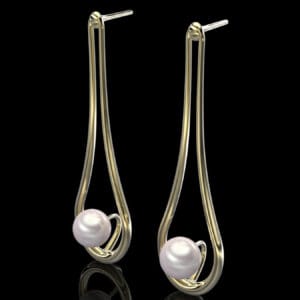
Aeglee Earrings
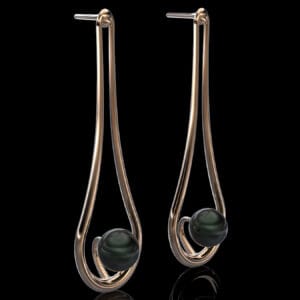
Aeglee earrings. Named for Aeglee, the most radiant of the Hesperides — the Greek nymphs who tended the garden of golden apples at the edge of the world. The Aeglee earrings carry that luminosity in 18k gold: a fluid teardrop form flowing downward to cradle a lustrous pearl in a soft organic loop. Available in rose, white, and yellow gold with black or white pearl.
Made to order.
Request a quote: contact@friszman.com or Contact us
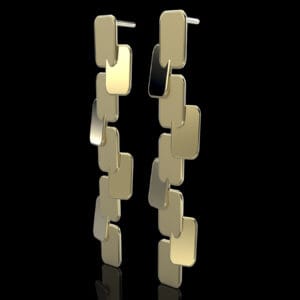
Aegys Earrings
Aegys earrings, named for the Aegis — the divine shield of Zeus, source of protection and terror in equal measure. These architectural 18k gold earrings translate that power into clean geometric forms that command attention with precision and restraint. Available in rose, white and yellow gold.
Made to order.
Request a quote: contact@friszman.com or Contact us
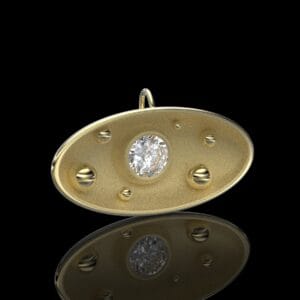
Andromedha Pendant
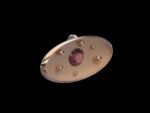
Andromedha pendant in 18k gold — oval galaxy-inspired design with a matte gold surface scattered with raised star orbs, centered by a brilliant gemstone. Named for the Andromeda galaxy. Available in Yellow Gold with Diamond, White Gold with Sapphire, and Rose Gold with Ruby.
Made to order.
Request a quote: contact@friszman.com or Contact us
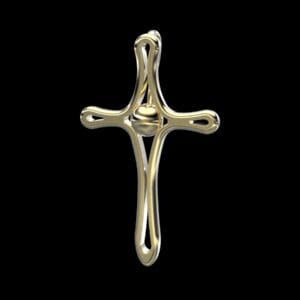
Ichthys Pendants
A sculptural Christian pendant in 18k gold, combining the ichthys fish, the cross, and the heart — identity, sacrifice, and love — in a single sacred form. The Ichthys pendant carries the oldest symbol of Christian faith, worn in secret before the cross was ever spoken aloud.
Made to order.
Request a quote: contact@friszman.com or Contact us
Michael Pendant
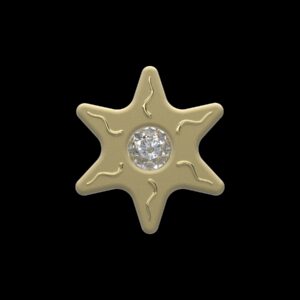
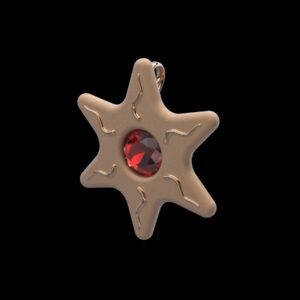
A six-pointed star pendant in 18k gold set with a diamond, ruby, or sapphire at its heart. The Michael pendant brings the Archangel Michael and the Magen David together in a single sacred form: the warrior who stands inside the geometry of divine promise.
Made to order.
Request a quote: contact@friszman.com or Contact us
Ransse Pendant
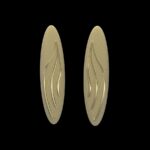
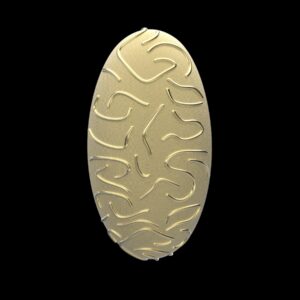
An oval pendant in 18k gold with raised polished lines, its form inspired by the Norse personal rune — the sacred mark that identified a person in the language of the Viking world.
Made to order.
Request a quote: contact@friszman.com or Contact us

Stauros Pendant
An architectural cross pendant in 18k gold with polished edges and contrasting matte surfaces. The Stauros Pendant takes its name from the original Greek word for the cross, the stauros, and renders it with the precision of sacred architecture.
Made to order.
Request a quote: contact@friszman.com or Contact us
Ynthi Pendant
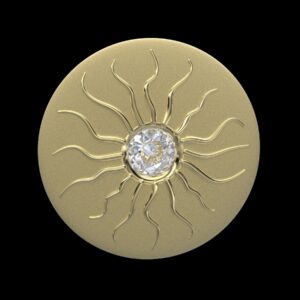
A sun disc pendant in 18k gold with radiating rays and a central gemstone. The Ynthi Pendant honors Inti — the Incan sun god whose golden disc was the supreme sacred object of the Inca Empire.
Made to order.
Request a quote: contact@friszman.com or Contact us