

Tyblits Earrings
$0.01
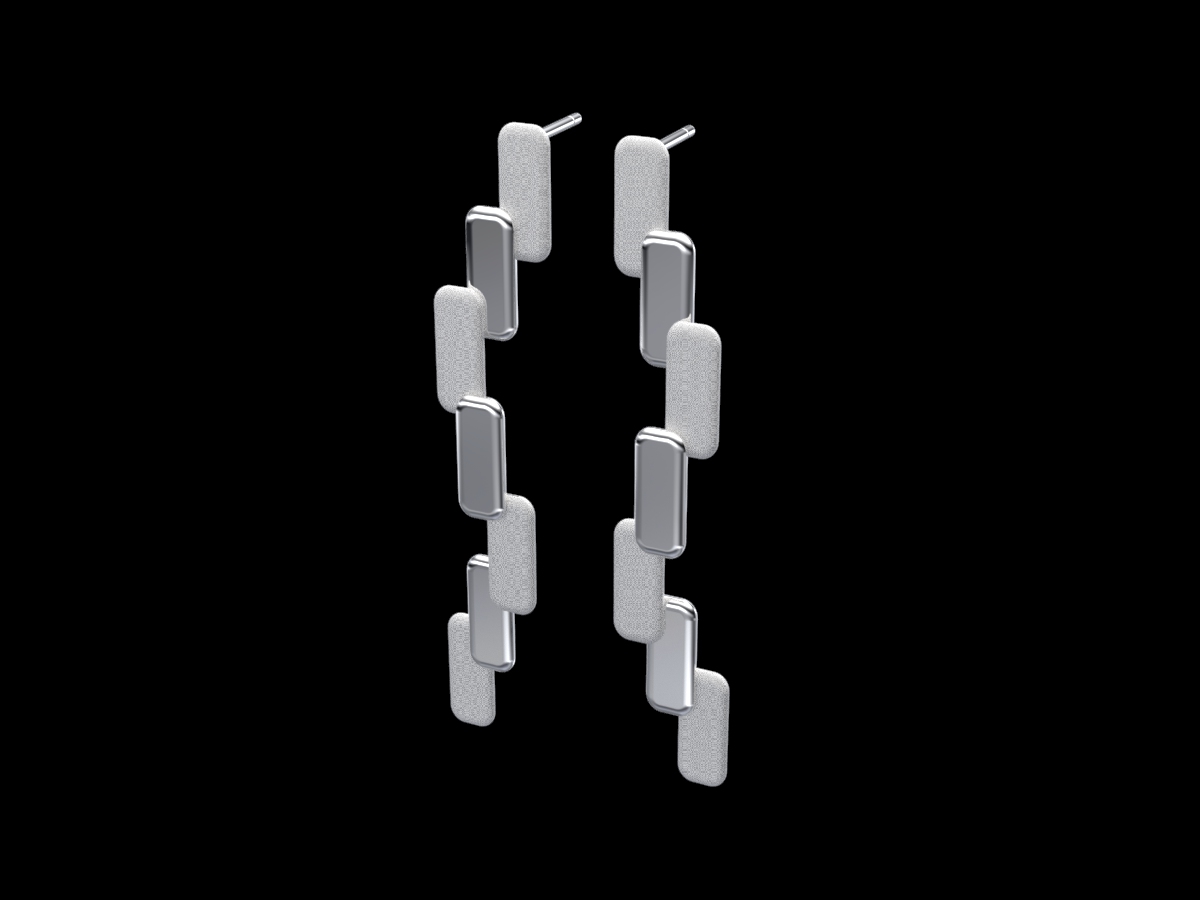
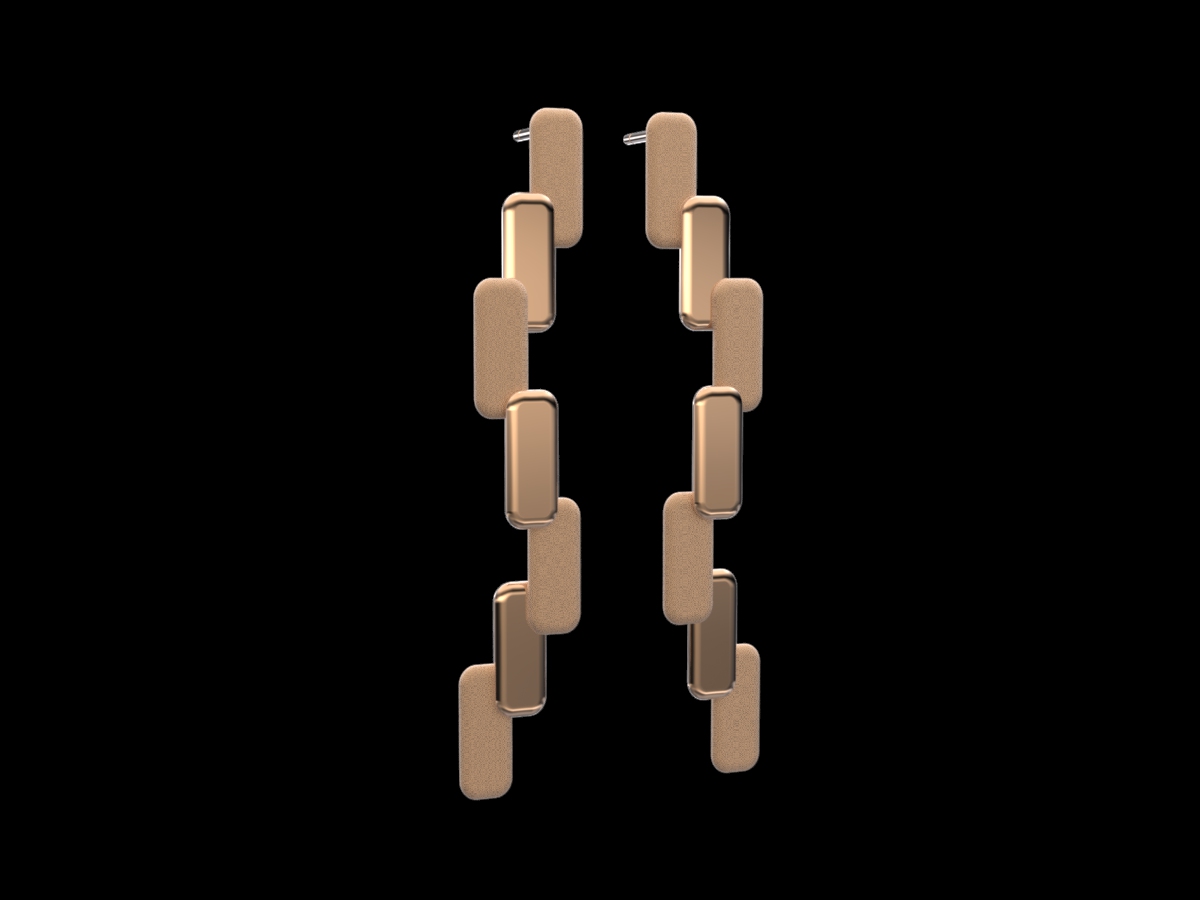
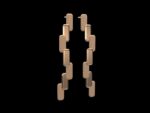
Cascading tile drop earrings in 18k gold, alternating matte and polished surfaces in an offset pattern inspired by Sumerian clay tablets and the brick-bond masonry of ancient Mesopotamia.
Made to order.
Request a quote: contact@friszman.com or Contact us
Tyblits Earrings draw their form from two of the most enduring material traditions of ancient Mesopotamia: the clay tablet and the fired brick. The clay tablet was the primary medium of Sumerian and Babylonian writing: wet clay pressed into a rectangular form, marked with a reed stylus in the wedge-shaped impressions of cuneiform script, then left to dry in the sun or fired in a kiln to make the record permanent.
As a result, the clay tablet is one of the oldest information storage devices in the history of the world — and the oldest surviving examples, pressed over five thousand years ago, are still readable today.
The rectangular tile form of the Tyblits Earrings carries the physical memory of those tablets: the proportioned rectangle, the offset arrangement, the alternating surface qualities of matte and polished that describe the difference between the impressed and the untouched surface.
Furthermore, the brick-bond masonry of Mesopotamia added a second layer of meaning to the same form: the ancient Sumerians and Babylonians built their cities, temples, and palaces from fired mud brick, laid in offset rows with alternating courses that distributed the load and gave the walls their characteristic visual rhythm.
The great ziggurats of Ur and Babylon, the walls of the city of Uruk, the palaces of Ashurbanipal — all were built from the same rectangular fired brick unit, laid in the same offset bond, their surface carrying the same alternating rhythm of light and shadow.
The Design of the Tyblits Earrings
The Tyblits Earrings translate the tile and tablet into 18k gold. Each piece is a cascade of rectangular tile elements that descend in an offset bond pattern — each tile placed so its centre aligns with the joint between the two tiles above it, exactly as fired bricks are laid in traditional masonry.
The tiles alternate between matte and polished surfaces, so the cascade reads as a pattern of absorption and reflection, depth and brightness, the way an actual brick wall reads in raking light.
As a result, the Tyblits Earrings carry both the visual logic of the cuneiform tablet and the material logic of the brick wall.
The Tile Cascade
The alternating matte and polished tile cascade is the soul of this design. Specifically, the offset arrangement of the tiles creates a visual rhythm that is both regular and interesting — the bricklayer’s pattern as earring form, the ancient logic of distributed load translated into the logic of visual distribution.
Worn as drops, the Tyblits Earrings descend from the ear in their cascading sequence, each tile reading distinctly. Furthermore, the alternation of matte and polished creates a surface of maximum contrast: the matte tiles absorbing the light while the polished tiles reflect it, so the cascade seems to breathe.
In this way, the Tyblits Earrings carry the quality of Mesopotamian material culture: the beauty of the repeated unit, the logic of the offset, the durability of what is made in multiples.
Tyblits Earrings in 18k Gold
In rose gold the tile cascade glows with warmth, the matte and polished tiles reading in a warm alternating rhythm. In white gold the Tyblits Earrings turn cool and precise, the cascade reading with the clarity of architectural surface in pale light.
In yellow gold they radiate with full golden intensity — the tiles of ancient Mesopotamia in the most vivid material, the masonry at its most golden. Whichever metal you choose, the cascade holds its bond.
Craftsmanship and 3D Precision
Each Tyblits earring was developed in 3D modeling software and brought to life through precision 3D printing and meticulous hand-finishing. The tile cascade demands digital modeling: every tile must be placed at exactly the right offset so the bond pattern reads as consistent throughout the cascade, and the two earrings of a pair must carry matching patterns.
Hand-finishing creates both the matte and polished surfaces on the alternating tiles. This is the precision that only the Friszman MD process can deliver reliably.
A Made-to-Order Piece
Like every Friszman MD creation, the Tyblits Earrings is made to order and hand-finished in 18k gold. Explore the full earrings collection to see how each design draws its form from the world’s great traditions. You can also explore the Sumerian clay tablet and the ancient masonry traditions of Mesopotamia in the collections of the Library of Congress.
| Gold | 18K Rose Gold, 18K White Gold, 18K Yellow Gold |
|---|
Related products
Anigridee Earrings
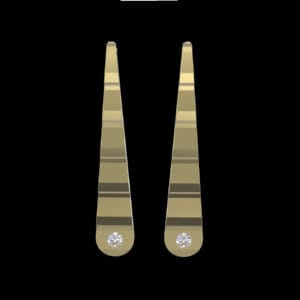
Anigridee earrings in 18k gold — long tapered architectural drop earrings with a precious stone at the tip, named for the Anigridae, the sacred healing nymphs of ancient Greece. Available in Yellow Gold with Diamond, White Gold with Sapphire, and Rose Gold with Ruby.
Made to order.
Request a quote: contact@friszman.com or Contact us
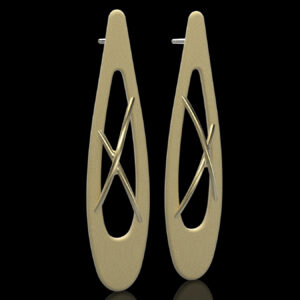
Archius Earrings
Archius earrings in 18k gold — two elongated columns of brushed gold crossed by sleek polished bars, named for Archias of Corinth, founder of Syracuse. Bold architectural jewelry designed to command attention. Available in Rose Gold, White Gold, and Yellow Gold.
Made to order.
Request a quote: contact@friszman.com or Contact us
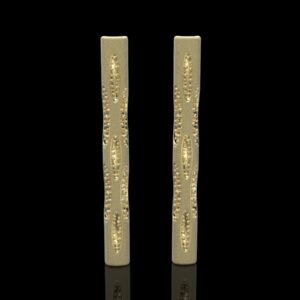
Aulyenee Earrings
Aulyenee earrings in 18k gold — tall brushed rectangular columns with elliptical windows revealing cascading granulation within, named for the Auloniad nymphs of the mountain valleys. Available in Rose Gold, White Gold, and Yellow Gold.
Made to order.
Request a quote: contact@friszman.com or Contact us
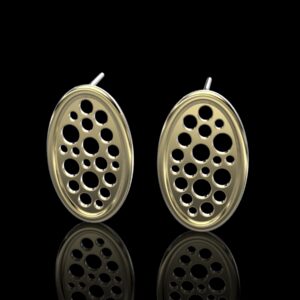
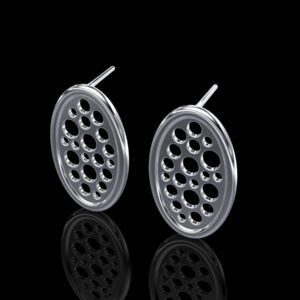
Aurelys Earrings
Bold oval forms in 18k gold, pierced with openwork that lets light and air pass through the metal. The Aurelys earrings are named for Aura, the Titan goddess of the breeze — structure and movement held in a single piece.
Made to order.
Request a quote: contact@friszman.com or Contact us
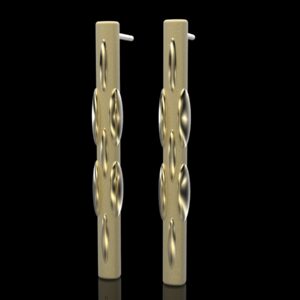
Aurhiael Earrings
A column of sand-brushed 18k gold set with polished convex ovals that emerge in pairs, each one a lens gathering light and holding it still. Named for a being of celestial light in the angelic tradition, Aurhiael earrings stand between the wearer and the world with the quiet authority of a guardian.
Made to order.
Request a quote: contact@friszman.com or Contact us
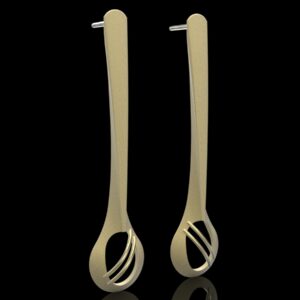
Ayneen Earrings
Geometric drop earrings in 18k gold, their angled planes built to gather sunlight and scatter it with every movement. The Ayneen earrings are named for Áine, the Irish goddess of summer, the sun, and sovereignty — radiance given an ordered form.
Made to order.
Request a quote: contact@friszman.com or Contact us
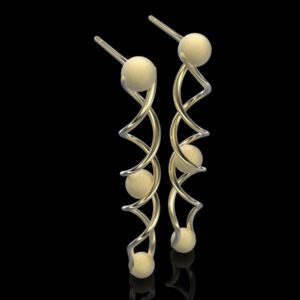
Chandra Earrings
Double helix earrings in 18k gold, their two spiraling strands evoking the waxing and waning of the lunar cycle. The Chandra earrings are named for Chandra, the Hindu god of the moon and keeper of the divine light — the rhythm of the cosmos made into gold.
Made to order.
Request a quote: contact@friszman.com or Contact us
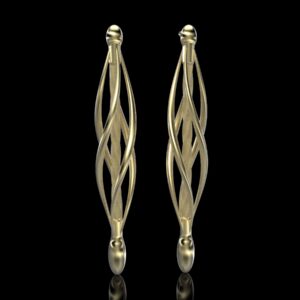
Djed Earrings
Spiral drop earrings in 18k gold, their form drawn from the Djed pillar — the backbone of Osiris and the ancient Egyptian symbol of endurance. The Djed earrings unwind the stacked rings of the sacred column into a descending helix.
Made to order.
Request a quote: contact@friszman.com or Contact us