
Orusborus Rings
$0.01
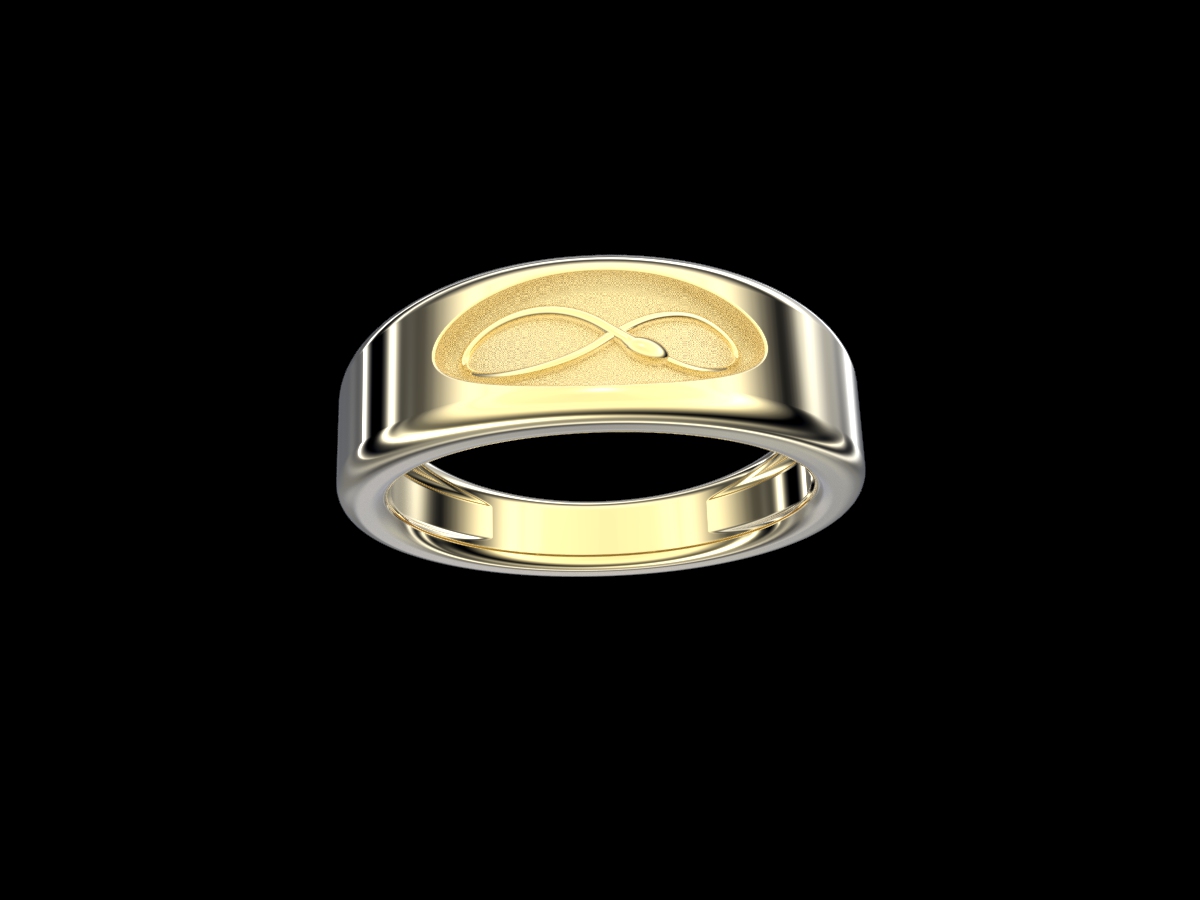
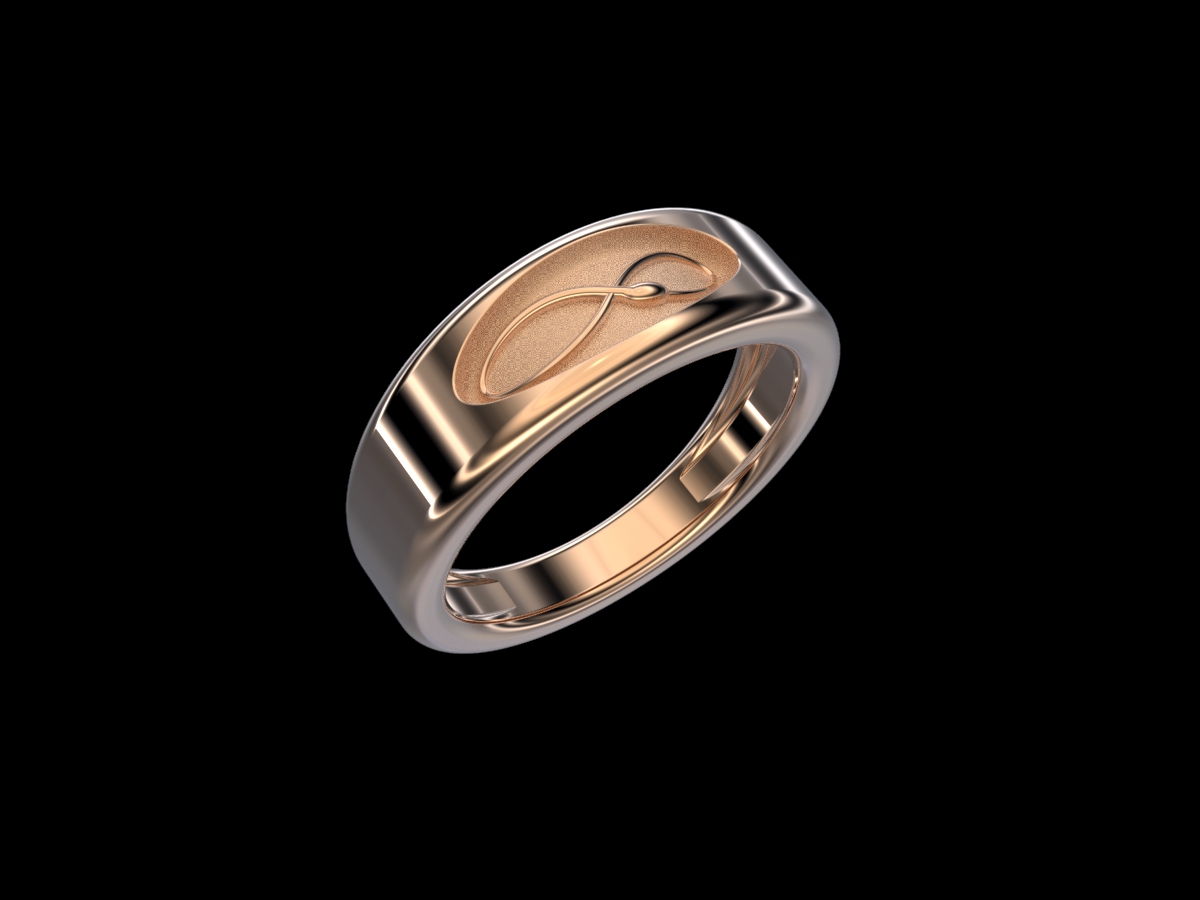
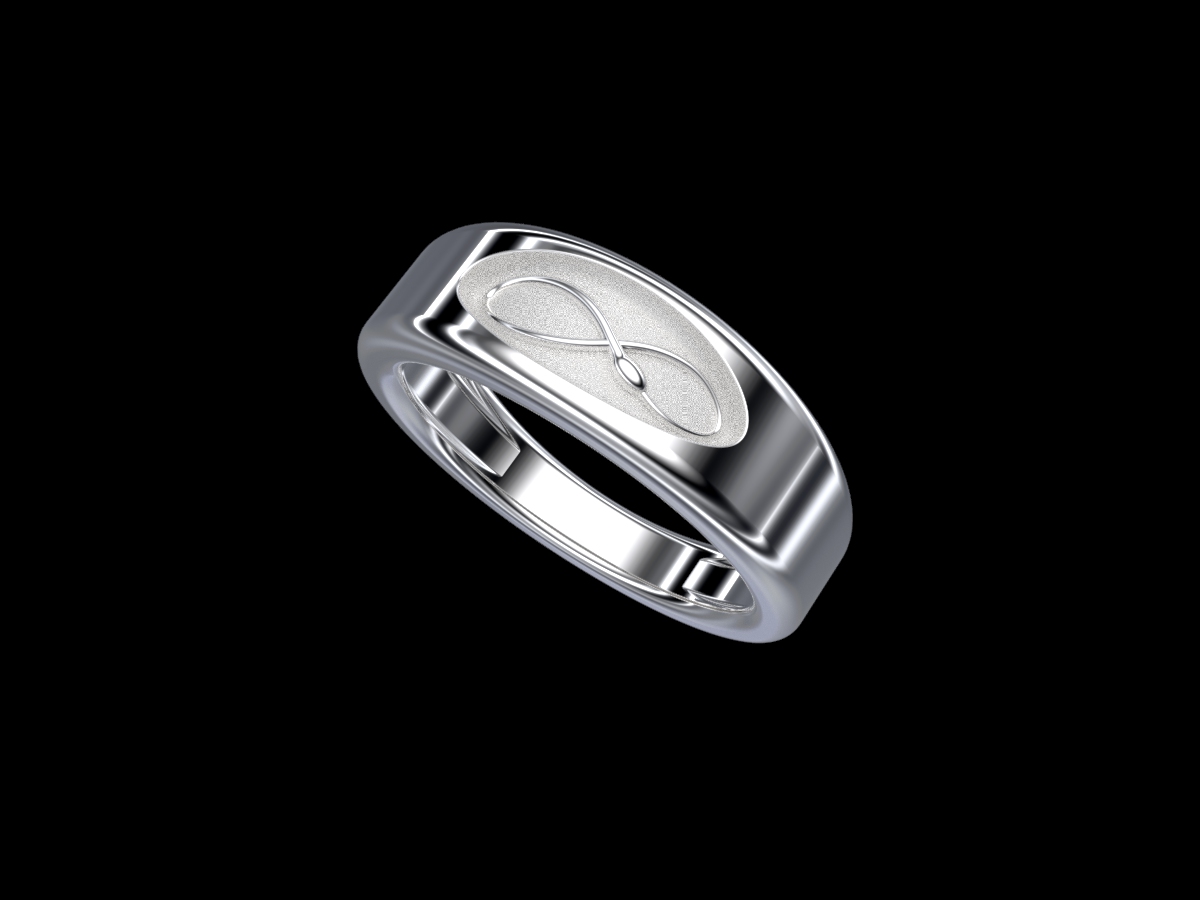
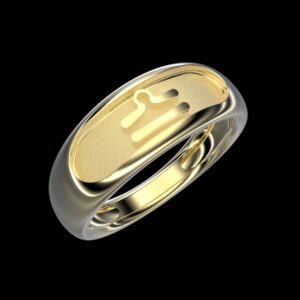
Orusborus Ring is a signet ring in 18k gold whose wide face carries the lemniscate, the Ouroboros in its mathematical form, in polished relief on a matte field. Inspired by the ancient serpent-eating-its-tail symbol found in Egyptian, Norse, Gnostic, a universal archetypal symbol and with alchemical traditions. Available in rose, white, and yellow gold. Hand-finished in Sao Paulo.
Orusborus Ring carries on its face the oldest philosophical symbol in the world, a symbol that preceded writing, preceded cities, and preceded every formal religion that humanity has produced, and that nevertheless survives today in the mathematical notation for infinity: the lemniscate, the figure-eight, the loop that crosses itself once and never ends. On the wide, cushioned face of this signet ring, the symbol is rendered in polished gold against a matte field, a line that begins anywhere and ends nowhere, that consumes itself and renews itself in the same gesture, that is simultaneously a serpent eating its own tail and a road with no terminus. This is the Ouroboros, the great circular symbol of eternal return, worn on the finger as a seal, a statement, a worldview compressed into a single continuous line.
The Ouroboros appears for the first time in recorded history in the tomb of Tutankhamun, painted on the innermost shrine of the young pharaoh who died at eighteen and was buried with the entire mythology of Egyptian cosmology wrapped around him. The image shows a serpent coiled in a circle, its tail in its mouth, its body enclosing the text of the Amduat, the ancient Egyptian Book of What Is in the Underworld, a journey through the twelve hours of the night that the sun god Ra undertakes each day, dying at dusk and being reborn at dawn. The Ouroboros is the boundary of this journey: the circle of time within which death and rebirth repeat endlessly, the container of the cycle that makes the sunrise possible.
In Norse cosmology, the same concept is embodied by Jormungandr, the Midgard Serpent, child of Loki and the giantess Angrboda, who grew so large that it encircled the entire world ocean and could bite its own tail. Jormungandr and Thor are fated to kill each other at Ragnarok: the serpent will poison the thunder god, who will walk nine steps and fall. But Ragnarok is not an ending, it is a reset, the precondition for the new world that rises from the sea when the old one sinks. Jormungandr is not a villain but a mechanism: the serpent that holds the world together by encircling it, the boundary that makes the interior possible.
In Gnostic and alchemical traditions, the Ouroboros became the central symbol of the great work, a universal archetypal symbol and with alchemical traditions the transmutation of base matter into gold, of the impure into the perfect, of the mortal into the eternal. The alchemists called this process solve et coagula: dissolve and reconstitute. The serpent eating its own tail was their emblem of this perpetual cycle of dissolution and rebirth, the idea that transformation requires the complete destruction of what existed before, and that what is destroyed becomes the material from which the new thing is made. The Orusborus Ring wears this alchemical inheritance on its face: the polished lemniscate in the matte field is the shining form emerging from the undifferentiated, the line that has separated itself from the surface to declare its own existence.
The lemniscate symbol itself, the mathematical sign for infinity, written as a horizontal figure-eight, was introduced into mathematics by the English mathematician John Wallis in 1655, but it was not his invention. It appears in pre-modern manuscripts as a symbol for eternity, in medieval religious art as the snake of Eden re-conceived as a cosmic boundary, and in the Celtic endless knot tradition as one of the most basic configurations of the interlocking line. The Orusborus Ring connects these traditions in a single form: the mathematical, the mythological, and the material all present simultaneously, each one a different language for the same idea.
The ring itself is a signet, wide, flat-faced, authoritative. It sits on the finger with the weight and presence of a seal, and the symbol on its face functions as such: this is the mark of someone who understands that endings are also beginnings, that the line that appears to stop is only turning back toward its own origin. Available in 18k rose gold, 18k white gold, and 18k yellow gold, with no gemstones — the Ouroboros requires no addition. Inner diameter in millimeters required. 3D designed, hand finished in Sao Paulo, Brazil.
| Gold | 18K Rose Gold, 18K White Gold, 18K Yellow Gold |
|---|
Related products
Gwrayd Rings
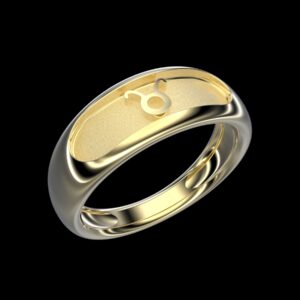
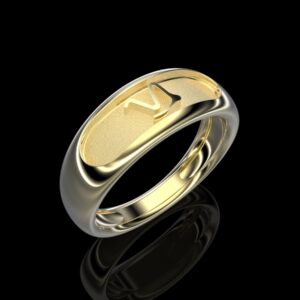
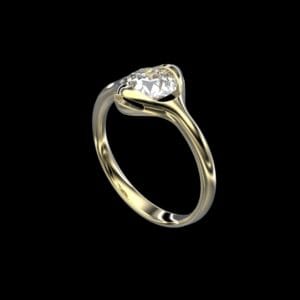
Named for Gwrayd, from the ancient Welsh tradition where sacred rivers were believed to carry the voices of the land itself, flowing between the worlds of the living and the divine. The Gwrayd ring carries that liminal energy in 18k gold: a sculptural band that holds a single precious stone at its crest. Available in yellow gold with diamond, white gold with sapphire, and rose gold with ruby. Made to order in São Paulo, Brazil.
Menrwa Rings
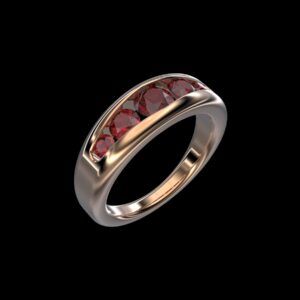
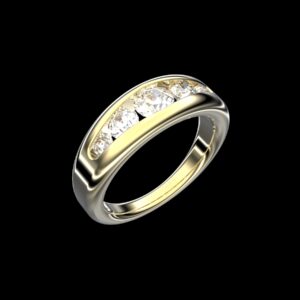
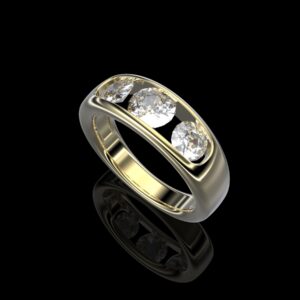
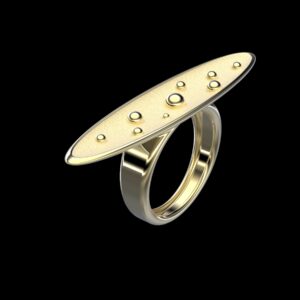
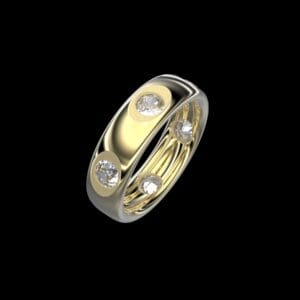
Named for Menrva, the Etruscan goddess of wisdom, craft, and war, the counterpart of Athena who was worshiped in the great temples of ancient Etruria before Rome absorbed everything around it. The Menrwa ring carries that rare combination of intellect and power in 18k gold, set with precious stones. Available in yellow gold with diamonds, white gold with sapphires, and rose gold with rubies. Made to order in São Paulo, Brazil.