
Heenalu Ring
$0.01
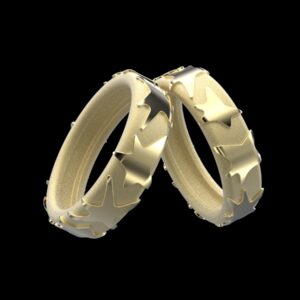
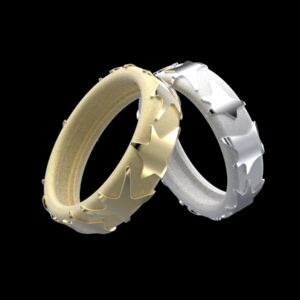
A flowing wave band in 18k gold, its pattern drawn from two traditions that share one form: the Hawaiian wave of he’e nalu and the Persian boteh flame of Zoroastrian tradition. The Heenalu ring is where fire and water discover they are the same gesture.
Made to order.
Request a quote: contact@friszman.com or Contact us
Heenalu ring takes its name from the Hawaiian ‘he’e nalu’ — the act of surfing, literally ‘to ride the wave.’ In Hawaiian tradition, the wave is not merely water in motion. It is a living force — the breath of the ocean, the expression of the deep.
However, the design of the Heenalu ring draws equally from another ancient tradition: the Persian boteh, the teardrop-shaped motif at the heart of what the West calls paisley. The boteh originated in the Persian world, where it represented the sacred flame of Zoroastrian tradition — the eternal fire of Ahura Mazda, the cosmic light that sustains existence.
As a result, the boteh is simultaneously a flame, a leaf, a teardrop, and a wave. Furthermore, what makes the Heenalu ring remarkable is the discovery at its heart: the Hawaiian wave and the Persian flame share the same geometry — the same curving, tapered form, the same sense of motion caught in a single stroke. Two ancient traditions, separated by an ocean, describe the same shape.
The Design of the Heenalu Ring
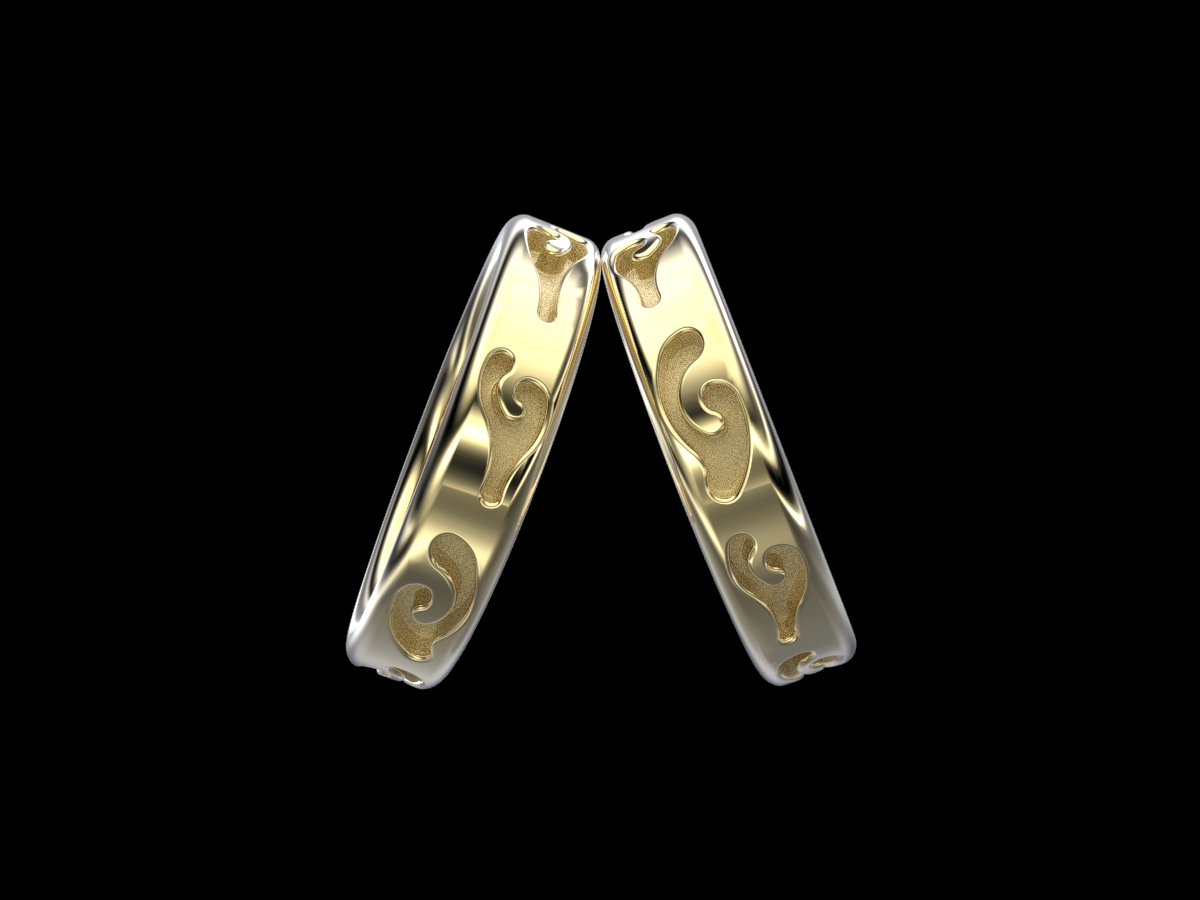
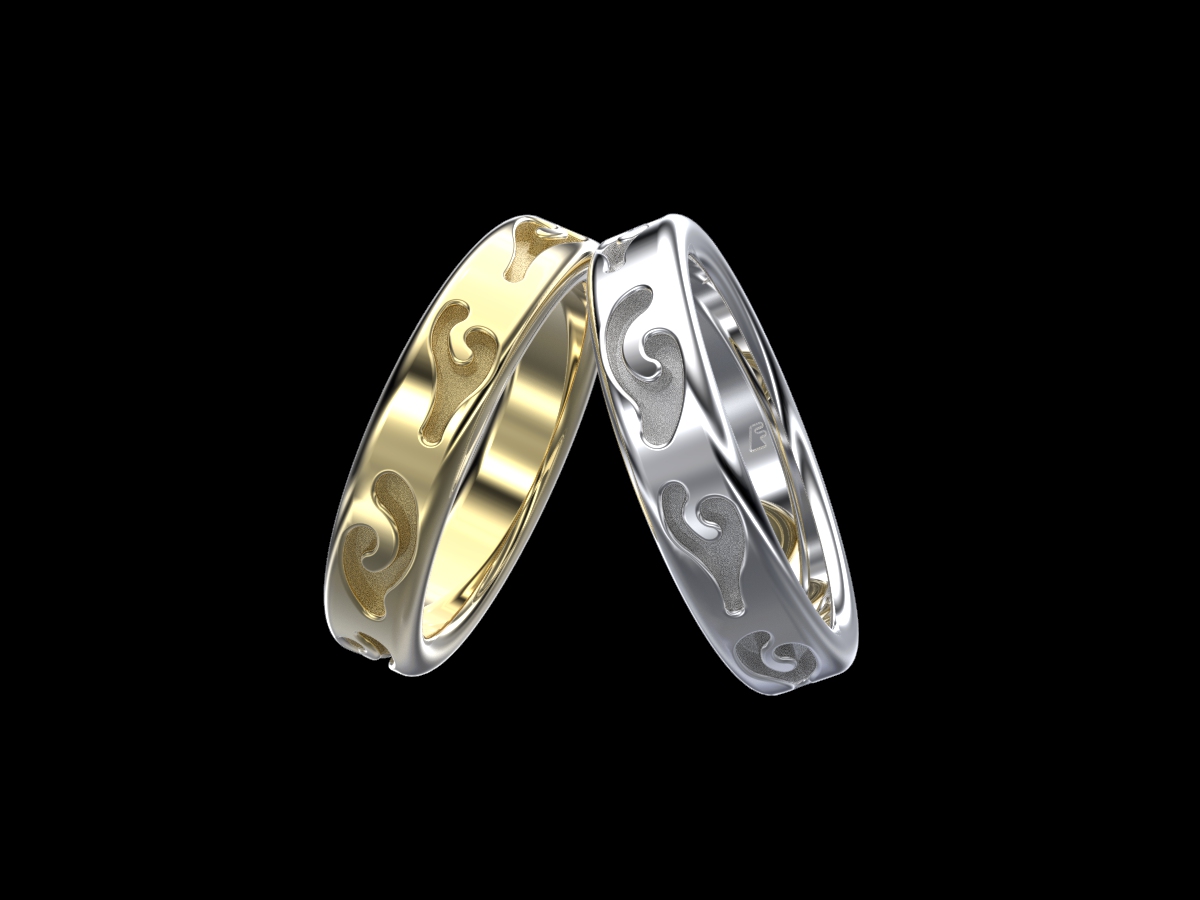
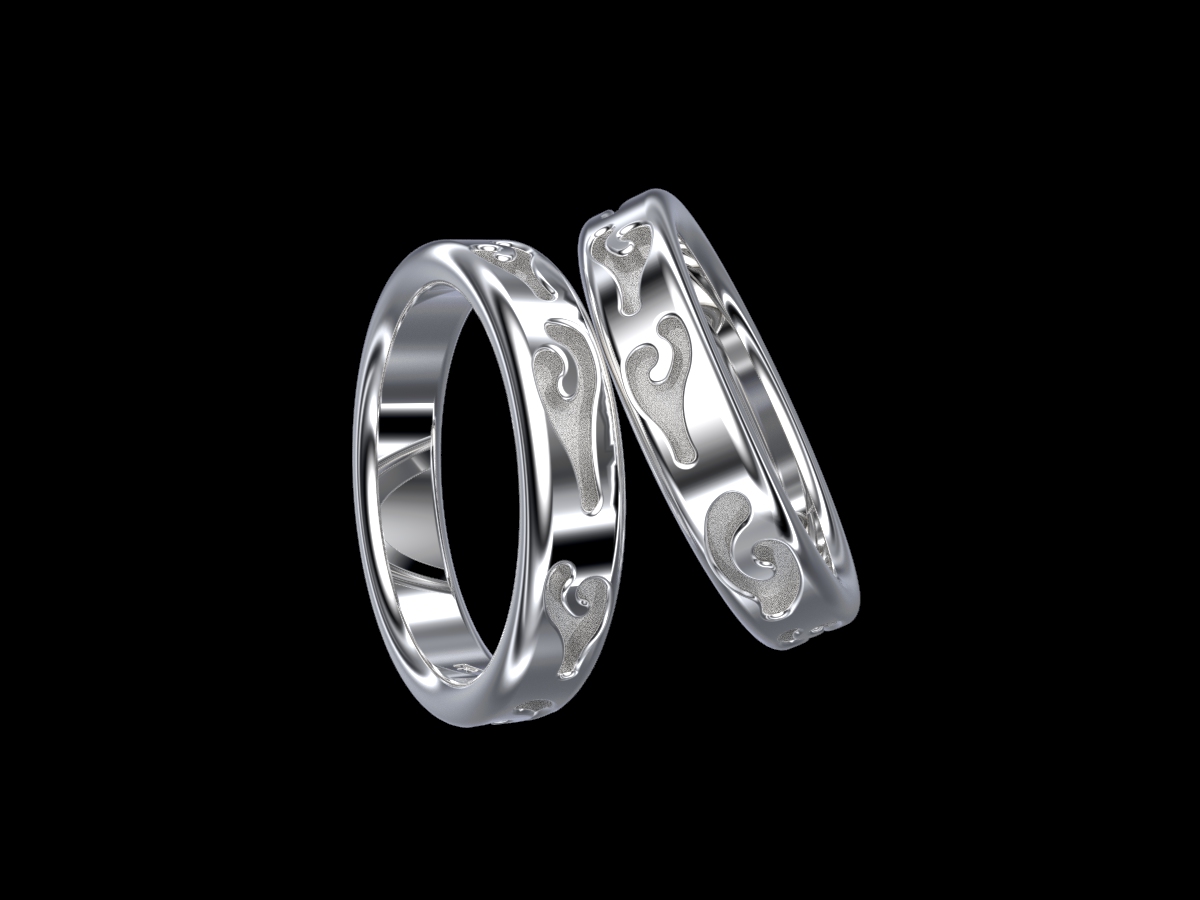
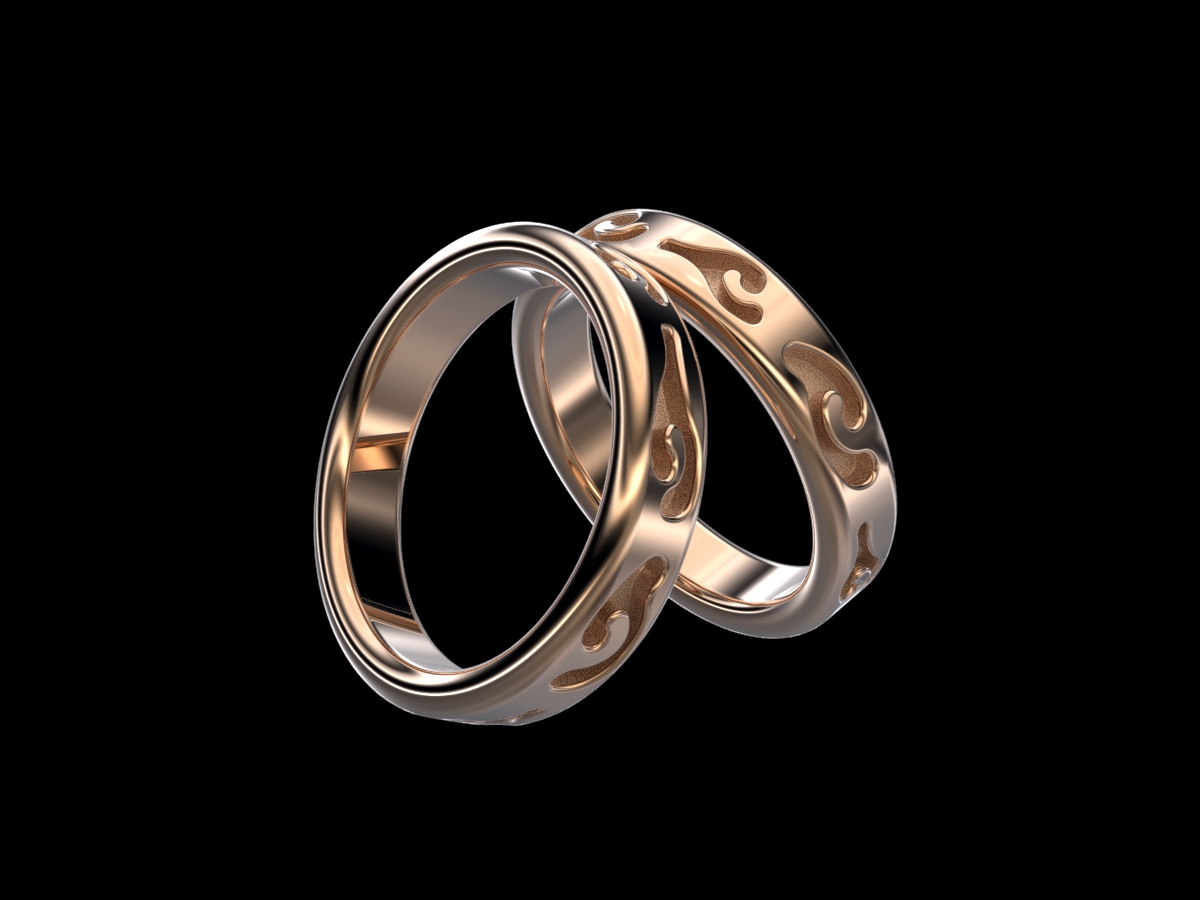
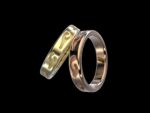
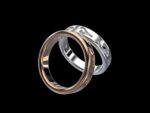
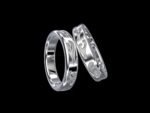
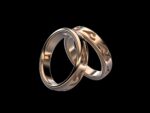
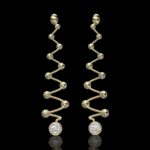
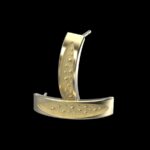
The Heenalu ring translates that shared form into a band of 18k gold. The surface carries the wave-flame pattern — flowing curves that rise and crest and taper, repeated around the band in a continuous rhythm.
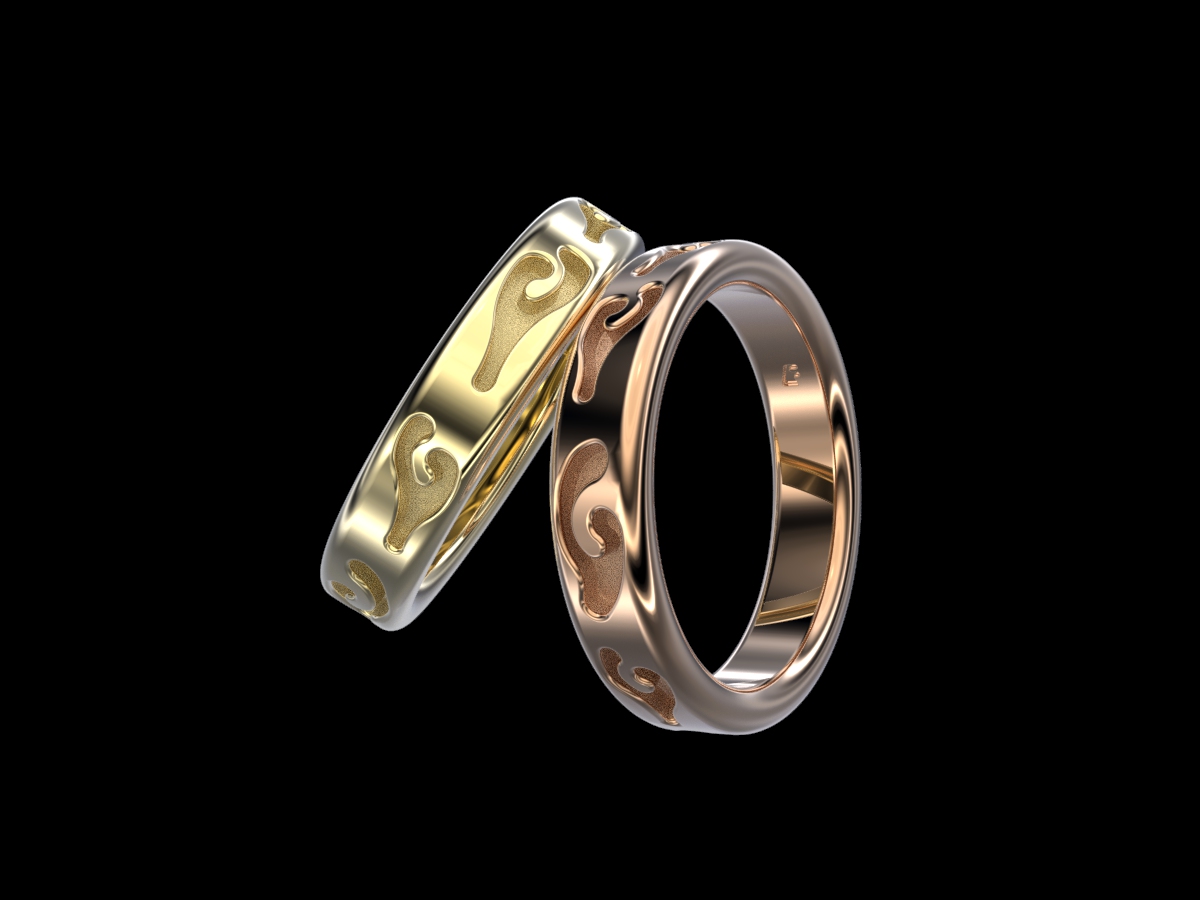
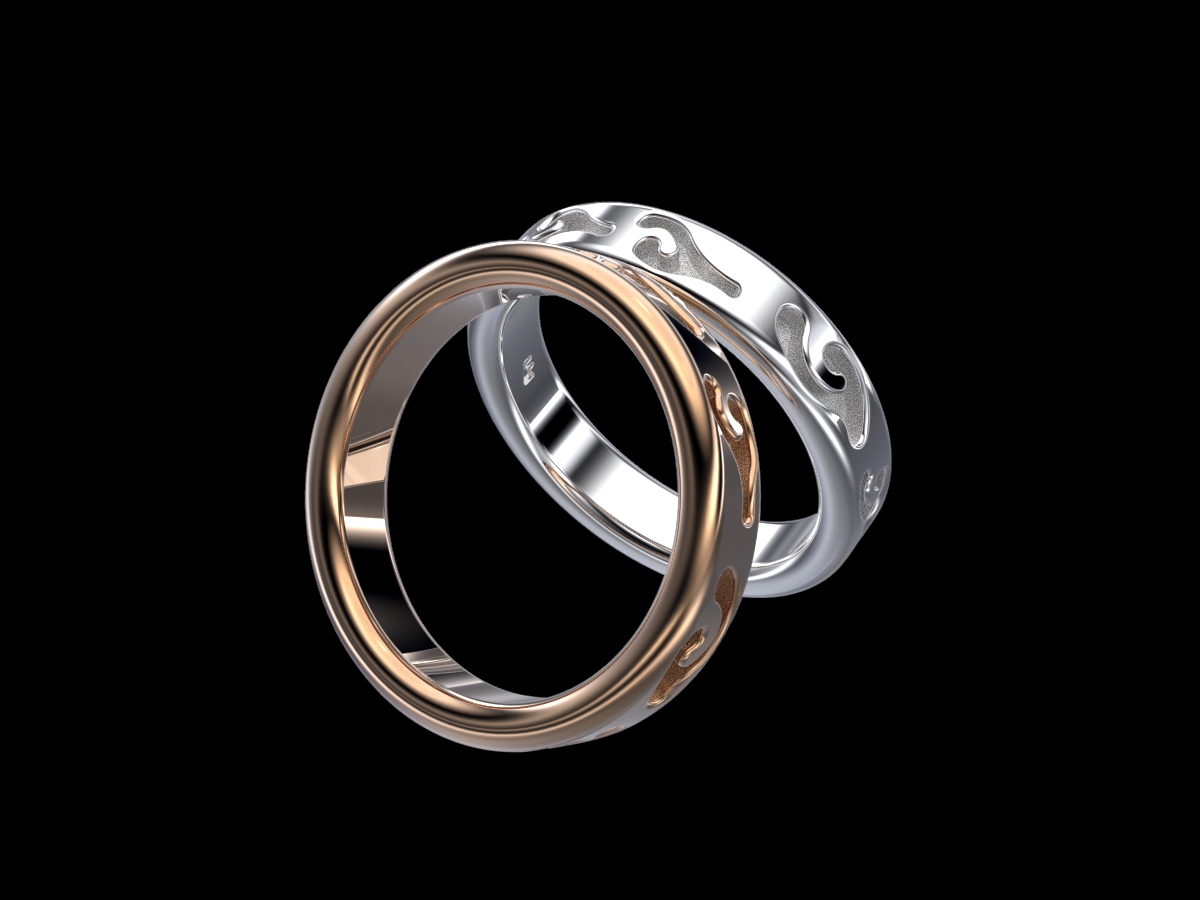
In mixed metal versions, the pattern alternates between two gold tones, so the warm and cool play against each other like fire and water in the same form. As a result, the Heenalu ring reads as a band in perpetual motion: something that moves while remaining still.
Therefore, it is a ring that rewards slow looking — the more carefully you trace the pattern, the more you see.
Wave and Flame
The shared curving form is the soul of this design. Specifically, the boteh’s taper and the wave’s crest are the same gesture made by different hands on different sides of the world. Worn on the finger, the Heenalu ring wraps the pattern continuously around the hand, so the waves and flames flow without interruption.
Furthermore, as the ring turns in the light, the two tones in the mixed metal version alternate between warm and cool, the way firelight and water light shift against each other. In this way, the ring carries the essential quality of both traditions: the sense that what appears to be opposites is, at its deepest level, one thing.
Heenalu Ring in 18k Gold
In rose gold and white gold the mixed metal band carries the wave pattern in two warm and cool voices, the contrast making the flowing form more vivid. In a single-metal rose gold band, the pattern glows warmly, reading rich and ancient.
In white gold the Heenalu ring turns cool and luminous, the wave-flame catching light with clean precision. In yellow gold it radiates with full golden intensity — the closest echo of the Zoroastrian sacred flame that gave the boteh its first form.
Additionally, as a couple’s ring or wedding band, the mixed metal version carries an additional meaning: two natures, one shared form.
Craftsmanship and 3D Precision
Each Heenalu ring was developed in 3D modeling software and brought to life through precision 3D printing and meticulous hand-finishing. The wave-flame pattern demands digital modeling: the curves must flow continuously around the band without a visible seam or repeat, the pattern must sit at a consistent depth so the relief reads as even, and the proportions must keep the ring comfortable for daily wear.
Additionally, in mixed metal versions, the two tones must meet cleanly at every transition point. Hand-finishing then polishes both metals to a high shine. This is the precision that only the Friszman MD process can deliver reliably.
A Made-to-Order Piece
Like every Friszman MD creation, the Heenalu ring is made to order and hand-finished in 18k gold. Explore the full rings collection to see how each design draws its form from the world’s great traditions. You can also explore the wave and ocean traditions of Hawaii in the collections of the Library of Congress.
| Gold | 18k Rose Gold & 18k Rose Gold, 18k White Gold & 18k Rose Gold, 18k White Gold & 18k White Gold, 18k Yellow & 18k Rose Gold, 18k Yellow Gold & 18k White Gold, 18k Yellow Gold & 18k Yellow Gold |
|---|
Related products
Aleeshy Ring
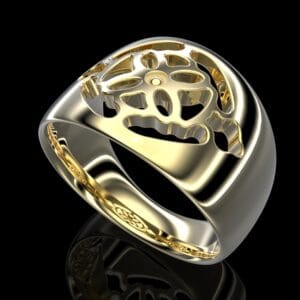
Aleeshy ring in 18k gold — a bold mandala-inspired statement ring where sacred geometry becomes wearable art. Every interlocking curve and opening is a meditation in gold, the wearer becoming part of the pattern. Available in Rose Gold, White Gold, and Yellow Gold.
Made to order.
Request a quote: contact@friszman.com or Contact us
Aquarius Ring
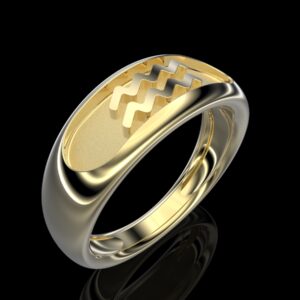
Aquarius ring in 18k yellow gold — featuring the Aquarius glyph in high relief on a wide matte oval face with polished shoulders. Inspired by the visionary energy of the eleventh zodiac sign and the myth of Ganymede, bearer of celestial waters.
Made to order.
Request a quote: contact@friszman.com or Contact us
Asteria Ring
Asteria ring in 18k gold — a wide sand-brushed band with polished star forms rising all the way around, named for the Greek Titaness of falling stars. Available in yellow gold, rose gold, white gold, and three two-tone combinations.
Made to order.
Request a quote: contact@friszman.com or Contact us
Cancer Ring
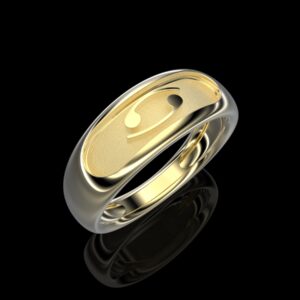
A sculptural zodiac ring in 18k gold, its band evoking the crab that Hera placed among the stars for its courage.The Cancer ring connects the wearer to the fourth sign of the zodiac — a water sign ruled by the moon, a myth about devotion rewarded with permanence.
Made to order.
Request a quote: contact@friszman.com or Contact us
Dathusy Ring
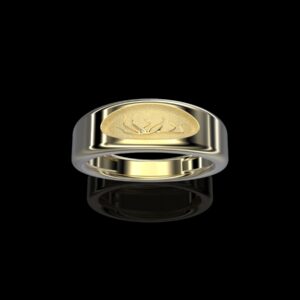
A Celtic shamanic signet ring in 18k gold, its broad face bearing a symbol drawn from the ancient visual language of the Druids. The Dathusy ring is made for those who understand that certain objects carry meaning beyond their form — a talisman as much as a ring.
Made to order.
Request a quote: contact@friszman.com or Contact us
Dhanush Ring
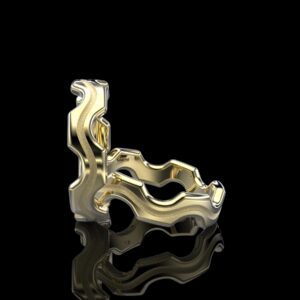
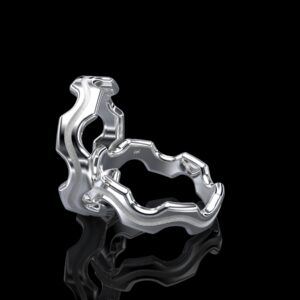
A two-tone sculptural ring in 18k gold, its arc drawn from the sacred bows of Hindu epic tradition. The Dhanush ring is named for the Sanskrit word for bow — the weapon of Arjuna in the Mahabharata and Rama in the Ramayana, symbol of dharma and focused purpose.
Made to order.
Request a quote: contact@friszman.com or Contact us
Pelee Ring
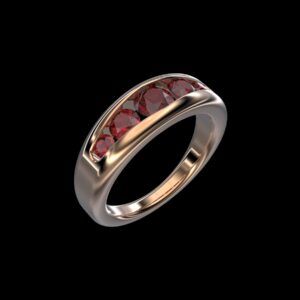
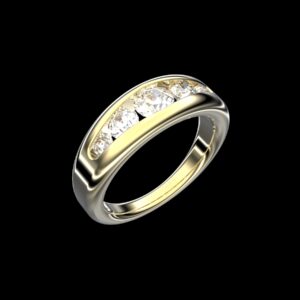
A channel-set gemstone ring in 18k gold, its sculpted band carrying a ruby, sapphire, or diamond in the channel of a shaped gold form. The Pelee Ring is named for Pele, the Hawaiian goddess who builds islands from fire.
Made to order.
Request a quote: contact@friszman.com or Contact us
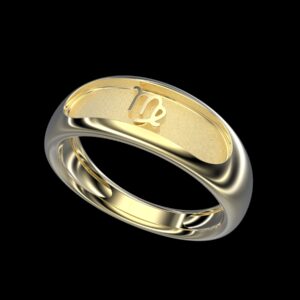
Virgo Ring
A sculpted zodiac ring in 18k gold, its band carrying the Virgo glyph in raised relief: the M with its inward-turning final stroke, the mark of the maiden, the grain, the refined and discerning earth sign.
Made to order.
Request a quote: contact@friszman.com or Contact us