
Blog
Water Across Civilizations – The Most Sacred Element in Human Mythology

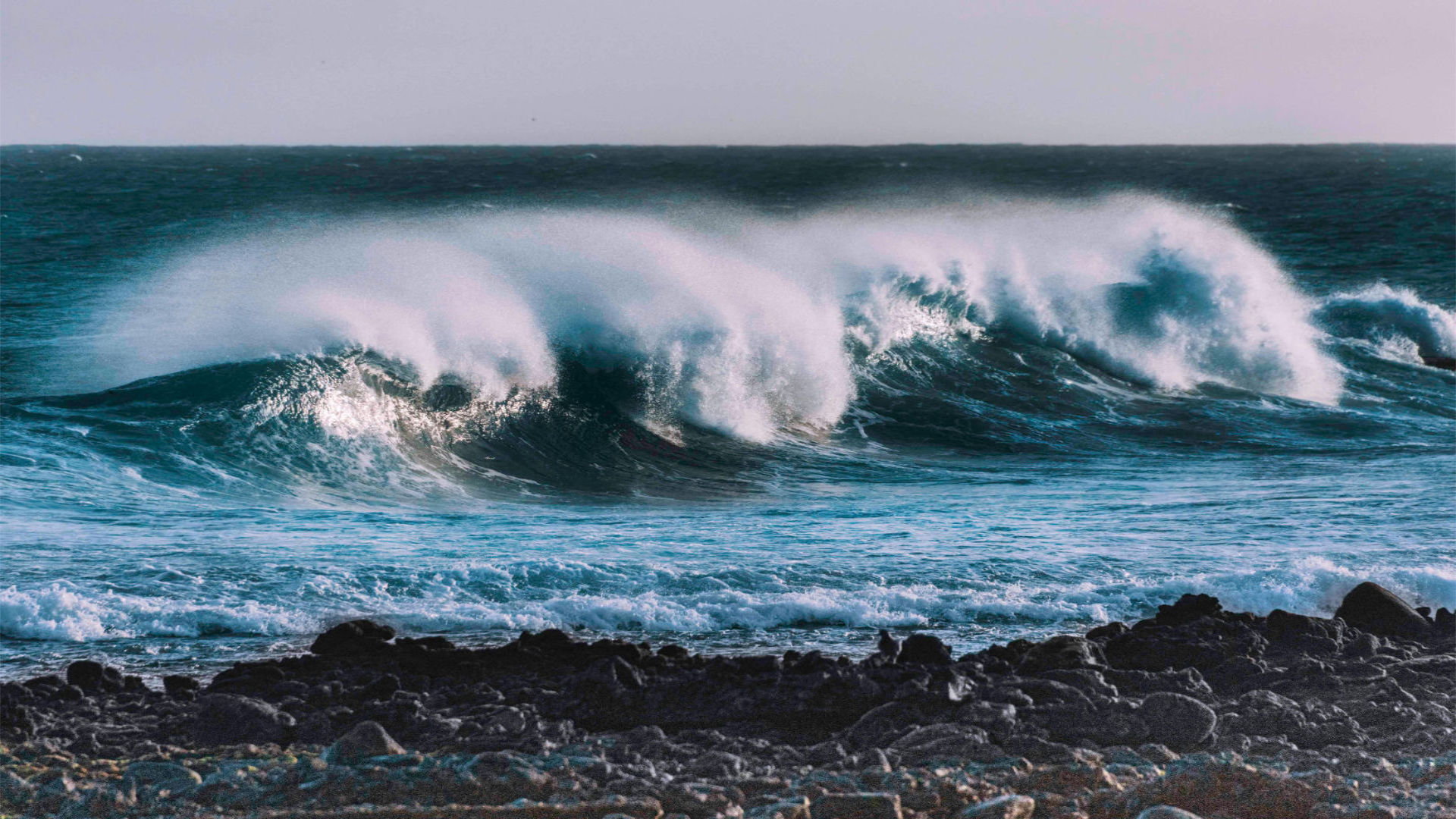
Water mythology is older than writing, older than agriculture, older than the first cities that rose beside the rivers of Mesopotamia and the Nile. Before human beings could articulate their cosmology in text, they had already built their most fundamental understandings of existence around water: its presence meant life, its absence meant death, its depths concealed the unknown, and its surfaces reflected back a world that was simultaneously familiar and reversed. Every civilization that has ever existed on this planet has placed water at the center of its mythological imagination, not as a symbol borrowed from another culture, but as an independent discovery of the same profound truth: that water is not merely a substance but a presence.
In the cosmologies of ancient Mesopotamia, the cradle of the world’s first written civilization, water was not merely present at the beginning of things; it was the beginning of things. Apsu, the god of the freshwater deep, and Tiamat, the goddess of the salt-water ocean, existed before the gods themselves. Their commingling, the meeting of fresh and salt water at the mouths of the Tigris and Euphrates, was the primordial creative act from which all subsequent existence emerged. The Babylonian creation epic Enuma Elish opens with the image of these two primordial waters mingling in a single, undifferentiated body before the first separation, the first naming, the first ordering of the world. Creation was not a separation from water, it was a differentiation within water.
In ancient Egypt, the same logic prevailed. The primordial ocean Nun, imagined as a limitless, formless expanse of dark water, was the substrate from which the first mound of earth emerged at the moment of creation. Each year, when the Nile flooded its banks and deposited the black silt that made Egyptian agriculture possible, the Egyptians understood this as a reenactment of creation itself: the primordial waters receding to reveal fertile ground. Hapi, the god of the Nile’s inundation, was depicted as androgynous and abundant, a being beyond binary category, whose dual nature encoded the understanding that water transcends all simple definitions.
Nereydeen Ring — The Fifty Daughters of the Sea
The Greek mythological tradition gave water its most elaborate divine hierarchy. At the outermost edge of the world, the Titan Oceanus encircled the earth as an endless river, the source of all fresh water, the boundary between the known world and the unknown beyond. His fifty daughters, the Nereids, inhabited the Mediterranean itself, each one embodying a specific quality of the sea’s character: Thetis its silver shimmer, Galatea its milk-white foam, Amphitrite its sovereign depths. Unlike the storm gods and titanic forces that dominate so much of Greek cosmology, the Nereids were creatures of nuance, each one a distinct presence, each one real, each one irreplaceable.
The Nereydeen ring by Friszman MD takes its name and spirit from these sea nymphs, a wide band of matte gold adorned with raised organic accent forms whose high-polished surfaces catch the light like wave-caps, each flash a different Nereid in motion. The matte body of the band is the ocean’s depth; the polished accents are its surface, perpetually alive. To wear it is to carry the full taxonomy of the sea on a single finger.
Nayad Earrings — The Spirit of the Freshwater Spring
In Hindu cosmology, water achieved its most sacred institutional expression. The great rivers of the Indian subcontinent, the Ganga, the Yamuna, the Saraswati, were not merely waterways but goddesses whose physical contact was understood to purify accumulated karmic weight across lifetimes. The Ganga, descending from the matted hair of Shiva in the Himalayas, carried within it the accumulated sacred power of its entire celestial and terrestrial journey. Varuna, the Vedic god of the cosmic ocean, presided over the moral order of the universe itself, the waters he commanded were not merely physical but ethical, their movement encoding the movement of dharma through the world.
The freshwater traditions of mythology are equally rich. The Naiads of Greek mythology, freshwater nymphs bound to individual springs, streams, and wells, represent the most intimate scale of water’s sacred presence: not the vast ocean but the specific source, the particular place where water emerges from the earth. Each Naiad’s existence was inseparable from the existence of her water: if the spring dried up, the Naiad who inhabited it ceased to exist. The Nayad earrings by Friszman MD embody this intimate quality, fine gold tendrils cascading from a stud post like water dividing over a stone, each strand tipped with a tiny sphere, a pearl resting in the convergence of the current like the spirit of the water made visible.
Oceanyse Earrings — The Ocean’s Edge
In Mesoamerican mythology, water carried both its generative and its terrifying aspects with equal force. Chalchiuhtlicue, “She of the jade skirt”, was the Aztec goddess of rivers, lakes, and streams, her jade-colored garment the very body of the water she governed. Her consort Tlaloc, the rain deity, was among the most feared and propitiated of all Aztec gods: without his blessing, the crops failed. The Aztec understanding of water was never sentimental, water was power, and power required acknowledgment. In the Aztec calendar, the age preceding the current world was destroyed by a great flood: water as the agent of cosmic renewal, washing away what had failed to sustain life.
In the Pacific traditions of Polynesia, the ocean was not a barrier between peoples but a highway, the medium through which the greatest navigational culture in human history moved across one third of the planet’s surface without instruments, reading the stars, the swells, the migration patterns of birds. The ocean was not something to be feared but something to be read with the full intelligence of the body and mind. The Oceanyse earrings by Friszman MD carry this oceanic spirit, a piece whose form evokes the perpetual motion of water that has no fixed state, no final resting place, no surface that does not also reflect the sky.
Water mythology teaches the same lesson in every culture it touches: that what sustains life is also what precedes it, and what will outlast it. The river that feeds the field also floods it. The ocean that carries the navigator also swallows the ship. This ambivalence is not a contradiction but a completeness, water, in the mythological imagination of humanity, is the element that most honestly reflects the nature of existence itself: generous, indifferent, necessary, and endlessly in motion. To wear a piece shaped by this understanding is to carry at the skin the oldest truth the world knows: that everything begins in water, and everything returns.